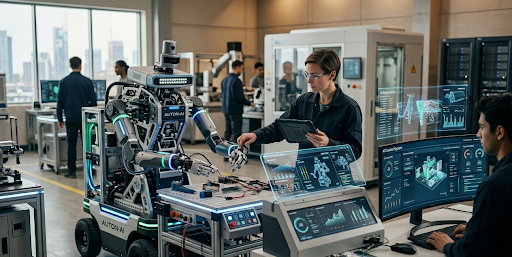
Robots will work with AI to make decisions and take action, but people will still need to guide and control them.
Business operations are changing a lot because of the rapid growth of autonomous robots. Smart machines aren’t just in sci-fi anymore; they’re being used everywhere, from shipping and manufacturing to healthcare and construction. AI systems are at the core of this revolution, helping robots to see, learn, and act on their own like never before.
The idea that we can have fully automated spaces without needing people at all is turning out to be too simple. Smart companies are finding out that the best and strongest systems are the ones that include people, not get rid of them. This hybrid approach mixes AI-driven robots with human supervision, and it’s a big step forward in driving the future of autonomous robotics. It helps organizations grow, keep things in check, improve accuracy, and stay very safe.
What Is Autonomous Robotics?
Autonomous robotics is about creating robots that can do tasks and make decisions on their own, without needing much help from people. These smart machines use AI, sensors, and programming to understand their environment, learn, and act on their own. This helps them move around, recognize things, adjust on the spot, and reach goals without needing help from people all the time.
The practical applications of autonomous robotics are vast and growing. In logistics, robots move around on their own to help manage inventory and make picking and packing in warehouses easier. Self-driving vehicles are changing how we move and deliver things, and inspection robots are safely checking dangerous places or areas that are hard to reach. Robots are being used more and more in healthcare to help patients, figure out what’s wrong with them, and even do some tricky procedures.
Even with amazing progress, real-life situations are still too complicated for the best autonomous systems to handle perfectly. This is where the concept of the “human in the loop” becomes not just beneficial but essential, paving the way for a more robust and adaptable future.
Why AI Alone Is Not Enough
AI advancements like machine learning and deep learning have really boosted robots, but depending only on AI brings some big hurdles. Even smart AI systems can mess up when they face situations they haven’t learned about or need human judgment.
Robots might have trouble moving around places like construction sites or busy city streets because they keep changing, and people act in unexpected ways. AI often has a hard time making complex ethical or safety decisions because it lacks human judgment and understanding. An autonomous car might face a new obstacle or a situation where a quick decision by a human would be important. Sometimes, during complex manufacturing, unexpected changes in materials or quality issues may need a person’s judgment to figure out and fix.
Some AI models can make mistakes because they’re based on probabilities, causing delays, inefficiencies, or even safety risks. This is particularly true in high-stakes applications like robotic surgery. People need to stay in control, so technology helps us and doesn’t end up taking over.
The Role of Human Operators in Robotics
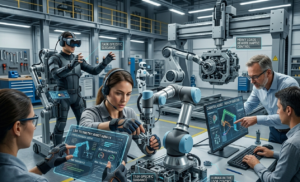
Human operators joining the autonomous robots make AI machines more like partners instead of just automated tools. People are important because they help machines work better in complicated situations by providing oversight, flexibility, and good judgment. Their roles extend beyond mere supervision to active participation in decision-making and problem-solving.
Operators can watch over AI robots from afar using special tools, so they can step in whenever something goes wrong. It’s especially useful in dangerous places or big areas where it’s hard or risky for people to be. In managing warehouse robots, a person can remotely change their path, fix navigation issues, or start maintenance tasks.
The teamwork makes sure that independent tasks are not only done well but are also safe and match the main goals. People make robot operations work better because they can think critically, understand context, and adapt to unexpected situations, making everything more reliable and resilient.
1. Improved Accuracy and Decision-Making
AI and people working together make things more accurate and help make better decisions. Although machine learning, especially deep learning, is great at handling big data and spotting patterns quickly, people add important critical thinking and context understanding. In surgeries, robots can make very precise movements with the help of AI, but the surgeon’s expertise is crucial for understanding patient data and making important decisions during the operation. In logistics, AI can help plan routes and manage tasks, but a person can change these plans if needed because of things like sudden traffic, important customers, or equipment issues to make things work better. Working together helps avoid mistakes and makes sure decisions are smart and fit the situation.
2. Increased Operational Efficiency
Combining the continuous operational capacity of AI with the adaptive problem-solving skills of human operators leads to substantial gains in operational efficiency. Robots can perform repetitive, labor-intensive tasks tirelessly, without fatigue, around the clock. This helps businesses keep things running smoothly in places like material handling or assembly lines. When unexpected problems like a conveyor belt jam, sensor issues, or a drop in product quality happen, human operators can quickly figure out what’s wrong and fix it, sometimes without being on site. This seamless handoff ensures that operational bottlenecks are minimized, and workflows remain smooth. In a warehouse, robots do most of the work, moving stuff around, while people keep an eye on them and fix any problems, which speeds up filling orders and makes everything run more smoothly. The robotics industry is seeing more of this trend, where companies use this balance to use resources better and get the most out of their efforts.
3. Enhanced Safety
Safety is crucial in any automated or semi-automated work, and working together with robots helps improve it. Robots have lots of safety tools, like sensors, to spot obstacles and avoid crashing. Humans are essential for overseeing and making sure that these systems follow safety rules and laws. They can keep an eye on the surroundings to catch any dangers that the robots’ sensors might overlook or misunderstand, like sudden changes in the area or nearby people who need extra care. In risky jobs like construction or mining, robots can do inspections or work with dangerous stuff, while humans control them from a distance and step in right away if something looks unsafe. The robot’s safety features and careful monitoring make the workplace safer for everyone.
4. Better Scalability
The hybrid model of autonomous robots makes it easy for businesses to grow without needing a lot more human management. Robots that use AI can be used more and more to help with bigger tasks, like running larger warehouses, making more products, or improving services. People can easily manage several robots at the same time using simple dashboards and support systems. One person can handle a lot of robots at once, making sure they work well, get updates, and follow the rules. This model helps companies keep up with market needs and expand easily by adding new robots without having to hire and train more workers. Revenue from collaborative robots is expected to grow a lot, from $970 million in 2023 to $7.2 billion by 2030. This means it’s growing by 28% each year, showing there’s a big demand for these kinds of robots.
5. Reduced Downtime
When humans and self-operating systems work together, there’s way less downtime. If a self-driving robot runs into a problem like a software bug, a mechanical issue, or something it can’t get past, a person can help fix it faster. Instead of the whole system stopping completely for maintenance or a big restart, a person can usually find out what’s wrong from afar, reset the machine, change its path, or even take control of it temporarily by hand. This swift response is crucial for maintaining continuous operations, especially in time-sensitive industries. In a factory, if a small problem happens on the assembly line, a person can fix it quickly and keep things running smoothly. In 2023, 10.5% of all industrial robots around the world were cobots, which are made to work closely with humans to help fix problems quickly and cut down on delays.
Real-World Applications of Hybrid Robotics
AI and people working together are quickly changing industries all over the world. Using both people and machines together makes things work better, faster, and safer than ever before.
Logistics and Warehousing
In logistics and storage, working together really shows in the smart handling of materials and the use of machines to make things easier. Robots and guided vehicles are great at handling repetitive tasks like sorting, picking, and moving goods in large warehouses. They can move around well and avoid obstacles because they use machine vision and Spatial Intelligence. However, human operators remain indispensable for overseeing these operations. They keep an eye on how the fleet is doing, fix any problems like lost items or system issues, quickly assign tasks based on priority, and make sure everything runs smoothly. Zebra Technologies and similar companies are leading the way in creating solutions that combine robots and humans for better warehouse management.
Manufacturing
Factories are using AI robots and human-like machines more and more to do different jobs. Robots with smart technology can do assembly, welding, and quality checks really well. They can handle dangerous or ergonomically challenging tasks, significantly improving worker safety. People are still important for making tough decisions, tweaking operations, spotting small flaws that machines might miss, and running the production line. AI is helping CNC Solutions work better by optimizing machining settings, but we still need human experts for programming, setup, and managing complex tasks. Robots can use soft grippers to handle delicate things, but people still need to oversee things to make sure they’re done right in different situations.
Healthcare
The impact of hybrid robotics is profound in the healthcare sector, particularly with the rise of medical robots and sophisticated surgical procedures. Robotic surgery systems, such as those used for total knee replacement or complex neurosurgical practice, leverage AI and advanced robot components like robotic endoscopes to provide surgeons with enhanced precision, dexterity, and visualization. The robotic system can perform intricate movements under the surgeon’s direct control, often magnified and stabilized through AI algorithms. In robotic radiosurgery systems, AI assists in precise tumor targeting. However, the surgeon remains the ultimate decision-maker, guiding the procedure and adapting to patient-specific needs. Beyond surgery, assistive robots powered by AI are helping patients with mobility and daily tasks, while human caregivers provide emotional support and personalized care, creating a holistic approach to patient well-being. Clinical applications are expanding rapidly, necessitating clear medical robotics regulatory frameworks to ensure patient safety.
Construction and Inspection
The construction and inspection industries are leveraging autonomous robotics to tackle hazardous and labor-intensive tasks. Robots equipped with advanced sensors and 3D visual systems can conduct inspections of bridges, pipelines, wind turbines, and other critical infrastructure in environments that would be dangerous or inaccessible for humans. These systems can collect vast amounts of data, processed by AI to identify structural anomalies or potential issues. Human operators, often working remotely, guide these robots, interpret the data, and make crucial decisions regarding maintenance or repair strategies. This hybrid approach not only enhances safety but also improves the efficiency and accuracy of inspections, potentially preventing catastrophic failures. Advanced Automation Projects in construction are increasingly incorporating drones and ground robots, managed by human experts, to streamline site surveying, progress monitoring, and hazard detection.
How This Approach Supports Business Growth
The strategic integration of AI with human operators is not merely a technological advancement; it is a powerful catalyst for sustainable business growth. This hybrid model provides businesses with a unique combination of agility, reliability, and efficiency that directly translates into a stronger competitive edge. By allowing AI-operated machines to handle repetitive, data-intensive, and physically demanding tasks, companies can free up their human workforce to focus on higher-value activities that require creativity, critical thinking, strategic planning, and complex problem-solving. This reallocation of human talent leads to improved innovation and better strategic decision-making.
Furthermore, this approach enhances operational resilience. When autonomous systems encounter unexpected challenges, the presence of human operators ensures swift intervention, minimizing costly downtime and maintaining productivity. This inherent flexibility allows businesses to adapt more readily to market fluctuations, evolving customer demands, and unforeseen disruptions. Companies can scale their operations more effectively by deploying more robotic assets while maintaining expert oversight, a capability crucial for market expansion. As Intelligent Automation becomes more sophisticated, this human-AI partnership fosters a culture of continuous improvement and optimization, ultimately driving profitability and long-term success in an increasingly dynamic global marketplace.
The Future of Autonomous Robotics
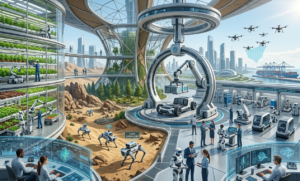
The trajectory of autonomous robotics points towards an increasingly intertwined future between humans and intelligent machines. The evolution of robotic systems will be characterized by sophisticated AI, driven by advancements in deep learning, Neural Network architectures, and more robust machine learning algorithms. We are witnessing the rise of more capable social robots designed for nuanced social interaction, incorporating advanced facial recognition, emotional design, and understanding of social cues to improve human-robot interaction (HRI) and reduce the impact of the uncanny valley.
Generative AI will help create new robot parts and improve strategies, while edge computing will make sure processing is fast and communication is quick, which is crucial for smooth human-robot interactions and autonomous control. Companies like Boston Dynamics keep innovating with advanced robots, showing that humanoid robots can work in tough situations. Software-defined vehicles will also apply to autonomous robots, allowing the systems to be more flexible and easier to upgrade.
The robotics market is expected to grow a lot because more people want robots for things like logistics, manufacturing, healthcare, and more. However, this progress is inextricably linked to the development and adherence to comprehensive ethical frameworks and clear legal legislation. Worries about AI bias, privacy, and security threats, such as data leaks, and strong IoT security, along with necessary safety features, will keep influencing how future robots are designed and used. We’re going to keep making AI that helps people and makes things easier for them, instead of taking over what people do. As these technologies improve, the line between activities done by machines and those controlled by people will fade, creating a teamwork-based system.
Conclusion
The journey of autonomous robotics is far from being a narrative of machines replacing humans entirely. The best way forward is for advanced AI and humans to work together smartly. AI-powered robots and smart automation are great at handling data and doing repetitive and complicated tasks, but we still need human judgment, creativity, and flexibility.
Working together, humans and AI help make surgeries precise, keep industrial robots safe, and improve logistics with smart systems. By using this mix of methods, businesses can work better, improve safety, grow bigger, and save money by reducing downtime.
As we progress, improving technologies like machine learning, deep learning, Natural Language Processing, and edge computing, along with a strong focus on ethical guidelines and human-focused AI, will enhance this partnership. The future of autonomous robots is about working together with people, making the world more innovative, productive, and safe.