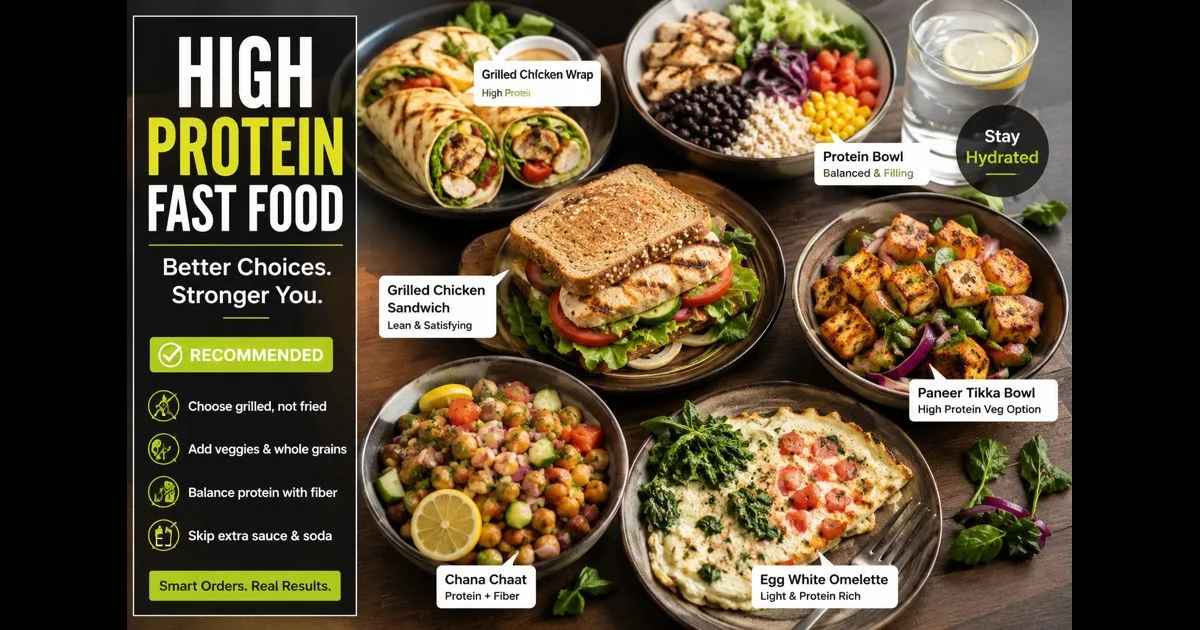
High protein fast food is not defined by the biggest burger or the largest serving of meat. A better choice combines a meaningful protein source with vegetables, beans, whole grains where available, and a realistic amount of sodium, saturated fat, and added sauce.
The most useful approach is simple: choose the protein first, then build the meal around it. This works whether the restaurant serves grilled chicken, eggs, paneer, tofu, beans, fish, kebabs, sandwiches, wraps, or rice bowls.
What Makes a Fast-Food Meal High in Protein?
A meal can contain plenty of protein and still be poorly balanced. Double patties, extra cheese, bacon, creamy sauces, and oversized portions can raise protein, but they can also bring large amounts of sodium, saturated fat, and calories.
A stronger order usually has three parts:
- A clear protein base, such as grilled chicken, eggs, fish, paneer, tofu, lentils, beans, or lean meat
- A fibre-rich component, such as vegetables, salad, beans, fruit, or a whole-grain base
- Flavour from salsa, herbs, chutney, lemon, spices, or a modest amount of sauce rather than a heavy layer of creamy dressing
This does not mean fried food or a burger must never be eaten. It simply means that protein grams alone do not tell the whole story.
Start With the Protein, Not the Side Dish
When scanning a menu, look first for meals built around a substantial protein ingredient.
Grilled chicken is often an easy starting point because it can appear in wraps, salads, bowls, sandwiches, kebabs, and rice plates. Eggs can make a compact breakfast more satisfying, especially when paired with vegetables or a whole-grain bread. Fish, where available, can be a useful option when it is grilled, baked, or lightly seasoned rather than heavily fried.
Vegetarian orders deserve the same attention. Paneer, tofu, Greek yogurt, lentils, chickpeas, black beans, rajma, and soy can all contribute protein. A bean or paneer bowl with vegetables is usually more substantial than a plain salad or a potato-based snack labelled “healthy.”
Better High-Protein Fast Food Orders by Meal Type
Breakfast Sandwiches and Egg Wraps
Egg-based breakfast items can provide a convenient protein base. Choose versions with egg, egg whites, cheese in moderation, vegetables, or lean meat if it suits your diet.
A breakfast sandwich becomes less balanced when it is loaded with sausage, bacon, butter, hash browns, and creamy sauce. That may still be enjoyable occasionally, but it is not automatically the best choice simply because it has more protein.
A practical order:
- Egg and vegetable sandwich or wrap
- Fruit, yogurt, or a small milk-based drink if available
- Skip or reduce extra breakfast meat and creamy spreads when they are not adding much satisfaction
Grilled Chicken Wraps and Sandwiches
A grilled chicken wrap or sandwich can be a dependable lunch, but the details matter. Ask for extra vegetables when they are included at no cost. Choose a whole-grain bread or wrap if available, and keep mayonnaise, cheese sauce, or ranch-style dressing modest.
A fried chicken sandwich may provide similar protein, but breading, oil, and rich sauces can change the meal considerably. If fried chicken is what you want, choosing a smaller portion and adding a vegetable side is often a more balanced decision than adding fries and a sugary drink.
Burrito Bowls, Rice Bowls, and Grain Bowls
Build-your-own bowls are among the most flexible high protein fast food choices. They allow you to combine chicken, fish, tofu, paneer, beans, or lentils with vegetables and a portion of rice or another grain.
A balanced bowl often includes:
- One main protein
- Beans or lentils, if available
- A generous serving of vegetables
- Salsa, lemon, herbs, or a lighter sauce
- Rice, roti, or another carbohydrate portion that fits your appetite and activity
Double protein can be useful for some people, but it is not essential for everyone. The goal is a meal that is filling and workable within the rest of the day.
Indian Quick-Service Meals
Indian fast food can offer useful protein choices beyond international chains. Tandoori chicken, grilled chicken tikka, egg bhurji rolls, paneer tikka, chana chaat, rajma bowls, dal-based meals, and kebab plates can all be built into more balanced orders.
The preparation matters. A tandoori or grilled item paired with salad, dal, beans, or roti is usually a different choice from a deep-fried snack served with sweetened drinks and creamy sauces. Chaat made with chickpeas, sprouts, onions, tomato, coriander, and lemon can be more filling than a refined-flour snack, although chutneys and fried toppings can quickly change the balance.
Burgers
Burgers can contribute protein, but the highest-protein burger is rarely the most balanced menu choice. A regular burger with a single patty, vegetables, and a sensible sauce portion may be enough. Adding multiple patties, bacon, extra cheese, and fries can turn one meal into a large share of the day’s sodium and saturated fat.
If a burger is the meal you want, choose it deliberately. Consider a side salad, fruit, corn, beans, or water instead of automatically adding fries and a sweet drink.
Pizza and Flatbreads
Pizza is not usually the first food associated with protein, but chicken, paneer, lean meat, or vegetable toppings can raise its protein content. Thin or regular crust, a reasonable portion, and vegetable toppings tend to make more sense than extra processed meat and multiple cheese layers.
A pizza meal is easier to balance when shared or paired with a salad rather than treated as a solo oversized order.
Vegetarian High-Protein Fast Food Choices
A vegetarian order should not rely only on cheese. Cheese can provide protein, but it can also raise saturated fat and sodium quickly.
Look for meals using one or more of these ingredients:
- Paneer or tofu
- Chickpeas, black beans, kidney beans, or lentils
- Greek yogurt or unsweetened curd
- Soy chunks or soy-based patties
- Eggs, for ovo-vegetarians
- Nuts and seeds as supporting ingredients rather than the entire protein source
A paneer-and-vegetable wrap, tofu bowl with beans, chickpea salad, or rajma rice bowl can be a more complete meal than a cheese-heavy sandwich.
Check More Than Protein Grams
Protein is important, but a menu label should be read in context.
Check the listed serving size first. A restaurant may show nutrition for one small item while a normal order includes two or three. Then look at sodium, saturated fat, fibre, and added sugars. Sauces, dressings, cheese, cured meats, and fried sides often make the largest difference.
Restaurant recipes and portion sizes change. Nutrition values can also vary between countries and locations. Use the chain’s current website, app, or in-store nutrition information instead of relying on an old listicle.
A broader approach to healthy fast food options can help when protein is only one part of the decision.
Simple Ordering Moves That Usually Help
Choose grilled, roasted, baked, tandoori, or lightly sautéed protein when available. Add vegetables or beans for volume and fibre. Keep sauces on the side when possible, especially creamy dressings and mayonnaise-based spreads. Choose water, unsweetened tea, or another low-sugar drink more often than a soft drink or shake.
These are flexible tools, not rigid rules. The right order should fit the meal you actually want, your dietary needs, and the rest of your day.
A Note on Daily Protein Needs
Protein needs are individual. Healthy adults need enough protein across the day, not necessarily a very large amount in one fast-food meal. ICMR–NIN’s general recommendation for healthy adults is 0.83 g per kg of body weight per day. People who are older, highly active, pregnant, managing a medical condition, or following a clinician-directed plan may need individual guidance.
A fast-food meal can contribute to that total, but it does not need to carry the entire day.
Final Thoughts
The best high protein fast food order is usually the one that starts with a protein you enjoy, includes vegetables or beans where possible, and does not hide its trade-offs behind a large protein number. Grilled chicken, eggs, paneer, tofu, lentils, beans, fish, and kebabs can all work well. Check current local nutrition information, adjust the sides and sauces, and choose a portion that leaves you satisfied rather than overly full.
FAQs
What is the healthiest high-protein fast food choice?
There is no single best choice for everyone. A grilled chicken, fish, paneer, tofu, egg, or bean-based meal with vegetables and a modest amount of sauce is often a more balanced option than a larger fried or cheese-heavy meal.
Is vegetarian fast food high in protein?
It can be. Paneer, tofu, chickpeas, beans, lentils, soy, Greek yogurt, and eggs can make vegetarian quick-service meals more substantial. Potato-based snacks and plain salads usually provide less protein unless a protein ingredient is added.
Are high-protein fast-food meals always healthy?
No. Some are high in sodium, saturated fat, calories, or added sugars. Check the full nutrition information and serving size rather than choosing by protein alone.
Should I choose grilled food instead of fried food?
Grilled or roasted options are often lower in added fat than fried versions, though the full meal still matters. Sauces, sides, portion size, and drinks can change the overall balance.