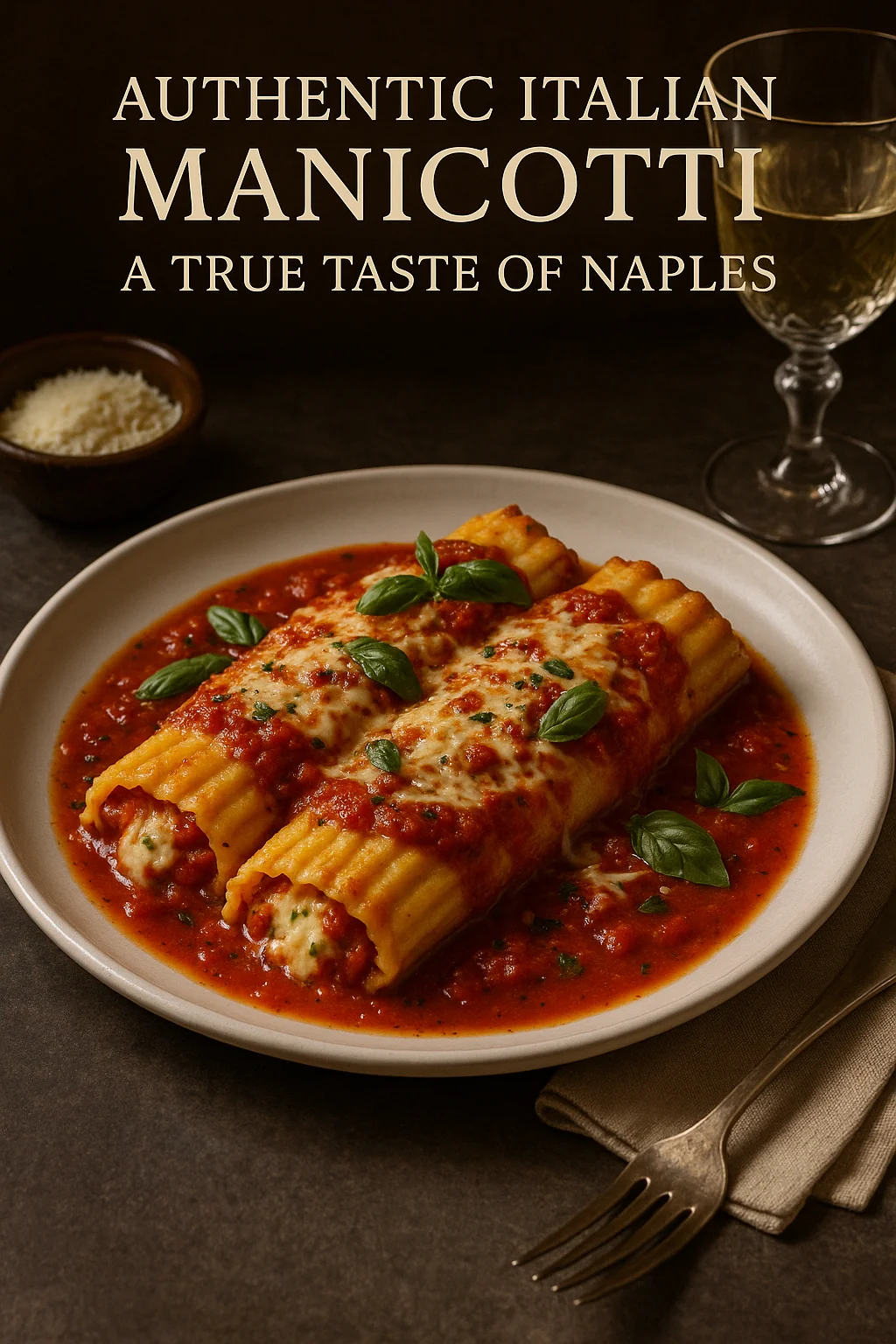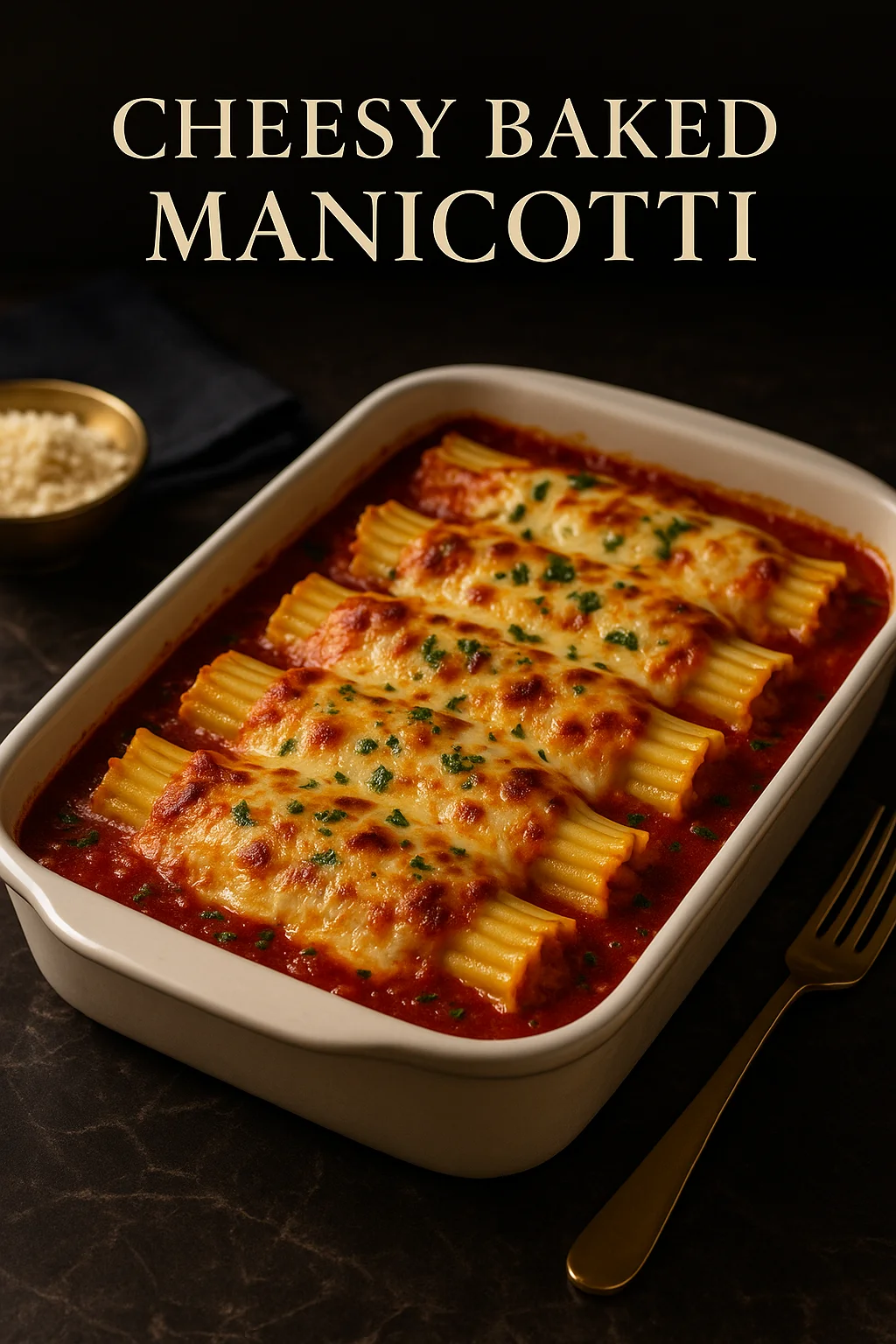
Classic manicotti is made by filling tender pasta tubes with ricotta, mozzarella and Parmesan, covering them with marinara, and baking until the sauce bubbles and the cheese melts. This meatless version serves six and keeps the filling creamy without becoming heavy.
Prep time: 30 minutes
Bake time: 35–40 minutes
Total time: about 1 hour 10 minutes
Serves: 6
Ingredients
For the filling
- 12 dried manicotti tubes, about 8 ounces (225 g)
- 15 ounces (425 g) whole-milk ricotta, drained if it looks wet
- 1 1/2 cups (150 g) low-moisture mozzarella, shredded, divided
- 1/2 cup (45 g) finely grated Parmesan, divided
- 1 large egg
- 2 tablespoons finely chopped flat-leaf parsley
- 1 small garlic clove, finely grated or minced
- 1/2 teaspoon fine salt
- 1/4 teaspoon freshly ground black pepper
- Pinch of freshly grated nutmeg, optional
For the dish
- 3 cups (700 g) marinara sauce, plus more for serving if wanted
- 1 teaspoon olive oil, only if needed to keep cooked tubes from sticking
Before You Start
Use ordinary dried manicotti tubes and cook them only until flexible and just shy of tender. Package times differ, so begin checking two to three minutes before the suggested time. Overcooked tubes split while filling and become too soft in the oven.
Choose low-moisture mozzarella rather than fresh mozzarella for the filling and topping. It melts smoothly without releasing as much water. If the ricotta has liquid in the tub, spoon it into a fine sieve for 10 to 15 minutes before mixing.
Method
- Heat the oven and prepare the dish. Heat the oven to 375°F (190°C). Spread 1 cup of marinara across the base of a 9-by-13-inch baking dish.
- Cook the pasta. Bring a large pot of well-salted water to a boil. Cook the manicotti until al dente and pliable, following the packet as the guide. Lift the tubes gently from the water with a spider or slotted spoon and place them in a single layer on a lightly oiled tray or baking paper. Let them cool until comfortable to handle.
- Mix the filling. Reserve 1/2 cup of mozzarella and 2 tablespoons of Parmesan for the top. In a bowl, combine the ricotta, remaining mozzarella, remaining Parmesan, egg, parsley, garlic, salt, pepper and nutmeg. Mix only until evenly combined. The filling should hold its shape on a spoon; if it looks loose, let it stand for five minutes before filling.
- Fill the tubes. Transfer the cheese mixture to a piping bag fitted with a wide plain tip, or use a sturdy food bag with one corner snipped off. Pipe filling into one end of each tube, then turn it and fill from the other end. Stop when the tube is full but not stretched; about 1/4 cup per tube is usually enough. A small spoon also works, but fill gently so the pasta does not tear.
- Assemble. Arrange the filled manicotti in one layer over the sauce. Spoon the remaining marinara evenly over the tubes, making sure the exposed edges are covered. Scatter the reserved mozzarella and Parmesan over the top.
- Bake. Cover the dish tightly with foil and bake for 25 minutes. Remove the foil and bake for 10 to 15 minutes more, until the sauce is bubbling around the edges and the cheese is melted with a few golden spots.
- Rest, then serve. Let the manicotti stand for 10 minutes. This gives the filling time to settle and makes the portions easier to lift without breaking.
Why This Method Works
The bottom layer of sauce keeps the pasta from catching on the dish, while the sauce on top protects the ends from drying out. The first covered bake heats the filling and softens any firmer areas of pasta in a moist environment. Finishing uncovered lets the cheese melt and brown lightly without overcooking the tubes.
Filling from both ends keeps the centre full without forcing too much cheese through a fragile tube. The egg gently sets the ricotta mixture as it bakes, so each portion remains creamy but holds together.
Troubleshooting
The pasta tubes keep tearing
They are usually overcooked or packed too tightly. Cook only until flexible, cool them in a single layer, and pipe rather than press the filling in. The practical fixes in these common manicotti mistakes are also useful when a pasta bake has cracked or turned dry.
The filling is watery
Drain wet ricotta first and use low-moisture mozzarella. Frozen spinach, if added, must be thawed and squeezed very dry before it goes into the cheese mixture.
The centre seems dry
Use enough sauce to cover the tubes and keep the dish tightly covered for the first part of baking. Dry pasta needs that trapped steam as well as the marinara to finish tenderly.
The tubes are still firm after baking
Cover the dish again and bake for another 5 to 10 minutes. Ovens and pasta brands vary, and the pasta should be tender before serving.
Make Ahead, Store and Reheat
Assemble the manicotti, cover tightly and refrigerate for up to 24 hours before baking. Add 5 to 10 minutes to the covered baking time when the dish is cold from the refrigerator.
For freezing, assemble the unbaked dish in a freezer-safe pan, cover with a layer of baking paper and then foil, and freeze for up to one month for best texture. Thaw overnight in the refrigerator before baking, then bake as directed, allowing extra time if the centre is still cold.
Refrigerate cooked leftovers in a shallow covered container within two hours. Use them within three to four days and reheat until the centre reaches 165°F (74°C).
Variations That Keep the Dish Classic
- Spinach and ricotta: Fold 5 ounces (140 g) of cooked, thoroughly squeezed spinach into the filling. For a fuller spinach version, see manicotti with spinach and ricotta.
- Fresh pasta: Fresh crepes or pasta sheets make a softer, rolled style of manicotti. The technique is different from stuffing dried tubes; use this guide to homemade manicotti pasta shells if making them from scratch.
- Meat sauce: Keep the cheese filling unchanged and serve the finished manicotti with a separately cooked beef or sausage marinara.
What to Serve With Manicotti
A crisp salad dressed with lemony vinaigrette, roasted broccoli or green beans, and warm bread are enough beside a rich pasta bake. Keep the side dishes simple so the ricotta filling and tomato sauce remain the focus.
Frequently Asked Questions
Do you have to boil manicotti before baking?
For standard dried tubes, parboiling until flexible is the most dependable approach because it makes filling easier and gives even texture. If the package specifically says no-boil, follow its directions and ensure the tubes are fully surrounded by sufficient sauce.
Can cottage cheese replace ricotta?
Yes. Use small-curd cottage cheese, drain excess liquid and blend briefly if a smoother filling is preferred. Ricotta gives the most traditional texture and a milder dairy flavour.
Can manicotti be assembled the day before?
Yes. Assemble, cover and refrigerate it for up to 24 hours. Bake it directly from the refrigerator, allowing a little extra covered time.
How do you know manicotti is done?
The sauce should bubble at the edges, the cheese should be melted, and a knife should slide easily through a tube. The filling should be hot throughout; reheat leftover portions to 165°F (74°C).
Is manicotti the same as cannelloni?
They are closely related stuffed pasta dishes, but manicotti commonly refers to ridged, pre-formed tubes in Italian-American cooking. Cannelloni is often made with smooth tubes or rolled pasta sheets.
Classic manicotti succeeds through a few careful choices: al-dente pasta, a drained cheese filling, enough marinara to protect the tubes and a short rest before serving. The result is a balanced baked pasta dish with distinct layers of tender pasta, creamy ricotta and bright tomato sauce.