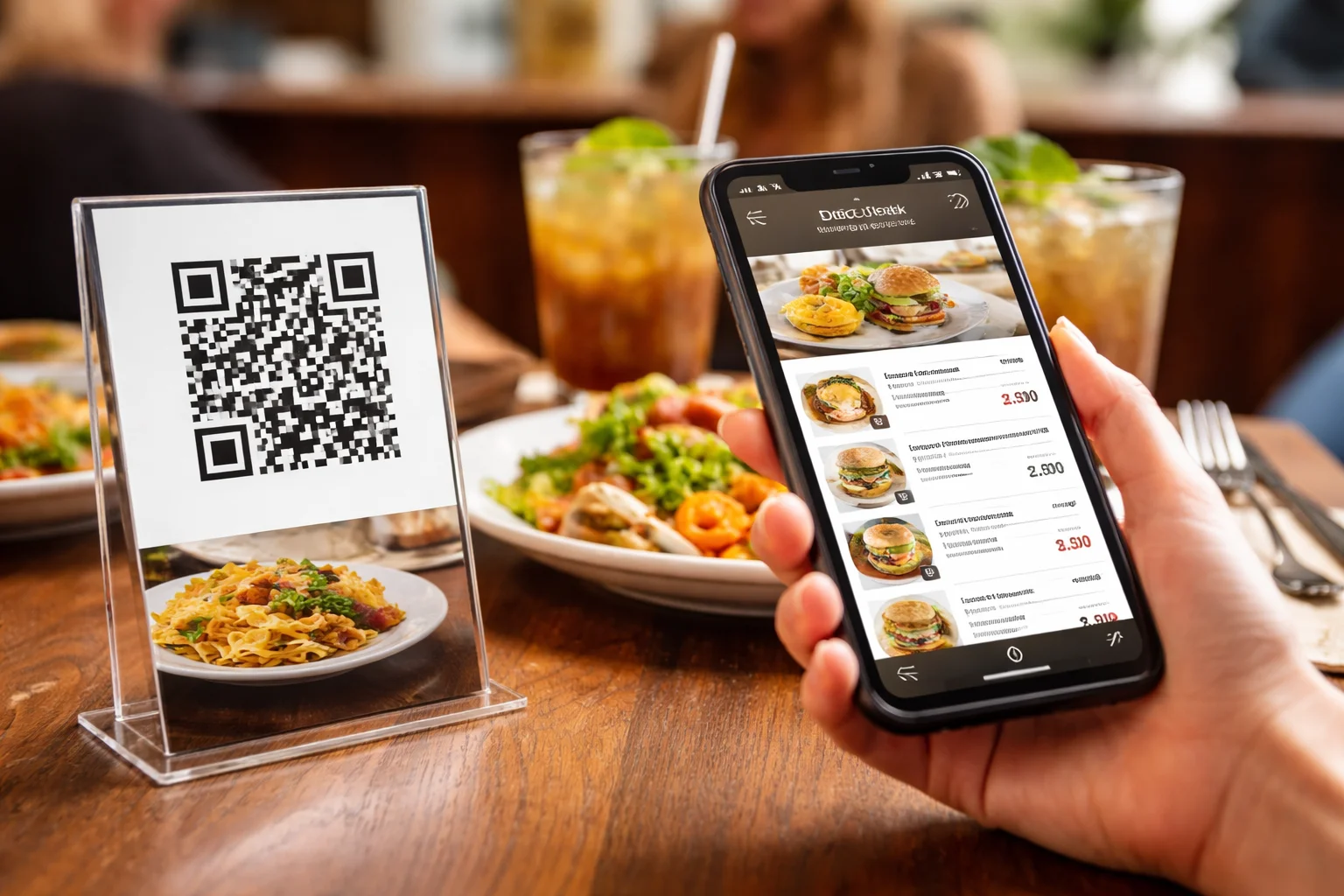
The restaurant industry has evolved rapidly in recent years, driven by changing customer behavior, rising operational costs, and the need for greater efficiency. One solution that has moved from a temporary trend to a permanent standard is the digital QR menu. What began as a contactless alternative has now become a strategic tool for modern restaurants looking to improve service, reduce expenses, and enhance the dining experience.
A digital QR menu allows customers to scan a QR code using their smartphone and instantly access the restaurant’s menu online. No app download is required. The menu opens in a browser, making it accessible to almost every customer with a mobile device. This simple shift replaces printed menus with a flexible, real-time system that benefits both restaurant owners and diners.
What Is a Digital QR Menu and How Does It Work
A digital QR menu is an online version of a restaurant’s menu that is accessed through a QR code placed on tables, counters, walls, or receipts. When a customer scans the code, they are taken to a web-based menu that displays food items, prices, descriptions, images, and sometimes allergen or nutritional information.
From the restaurant’s side, the menu is managed through an admin dashboard. Owners or managers can update prices, add or remove items, mark dishes as unavailable, or introduce seasonal specials without reprinting anything. Changes go live instantly, eliminating delays and manual work.
Some advanced digital QR menu systems also integrate with ordering, table management, or payment systems, but even a basic setup offers immediate operational improvements.
Key Benefits of Using a Digital QR Menu
One of the most immediate benefits is cost reduction. Printing menus repeatedly is expensive, especially for restaurants that update prices often or run frequent promotions. A digital QR menu removes ongoing printing costs and allows unlimited updates at no additional expense.
Speed and efficiency also improve. Customers can browse the menu as soon as they sit down, without waiting for staff to hand out menus. This reduces wait times and helps staff focus on service rather than logistics, particularly during busy hours.
Accuracy is another major advantage. Printed menus often contain outdated prices or items that are no longer available. With a digital QR menu, updates are instant. This prevents awkward conversations, improves transparency, and builds customer trust.
The digital format also enhances the customer experience. Clear categories, item descriptions, and high-quality images help customers make decisions faster. For tourists or international diners, language options can be added, removing communication barriers.
From a hygiene perspective, shared physical menus are no longer ideal. While this was a primary driver during earlier years, many customers now expect contactless options as part of a modern dining environment.
Real-World Use Cases in Restaurants
Small cafés use digital QR menus to manage daily specials without reprinting boards or flyers. Fine dining restaurants rely on them to present tasting menus, wine lists, and allergen information in a clean, professional way. Fast-casual restaurants benefit from faster ordering and shorter queues, while food trucks and pop-up kitchens appreciate the flexibility of changing menus on the fly.
Restaurants operating multiple branches gain centralized control. A single update can reflect across all locations, ensuring consistency and saving management time.
Understanding the Costs of a Digital QR Menu
The cost of a digital QR menu varies depending on the provider and features. Basic systems are often very affordable and sometimes even free, offering essential menu hosting and QR code generation.
Mid-range solutions typically include customization, analytics, multiple language support, and branding options. These may involve a small monthly or yearly subscription.
Advanced platforms with ordering, payment integration, and CRM features cost more but often replace multiple systems, making them cost-effective in the long term.
It is important to evaluate costs not just in terms of subscription fees, but also in savings from printing, reduced staff workload, and improved operational efficiency.
How to Set Up a Digital QR Menu Properly
Setting up a digital QR menu starts with choosing a reliable platform. The system should be fast, mobile-friendly, and easy to manage. Menu load speed is critical. Customers will abandon slow or poorly designed menus.
Once the platform is selected, the menu content should be structured clearly. Categories should be logical, descriptions concise, and prices visible. High-quality images help, but they should be optimized to avoid slowing down the page.
Next comes QR code placement. Codes should be visible, easy to scan, and placed where customers naturally look. Tables, counters, and menu stands are ideal. The QR code should link directly to the menu, not a generic homepage.
Staff training is often overlooked but essential. Servers should be comfortable explaining how the digital QR menu works and assisting customers who are less tech-savvy.
Finally, testing is crucial. The menu should be tested on different devices, screen sizes, and internet connections to ensure a smooth experience.
SEO and Marketing Value of a Digital QR Menu
A well-implemented digital QR menu can also support online visibility. When the menu is indexed by search engines, it helps restaurants appear in local searches. It can be linked from Google Business profiles and social media pages, creating a consistent digital presence.
When integrated properly, a digital QR menu can also capture insights such as popular items, peak browsing times, and customer behavior. These insights help restaurants make data-driven decisions.
Final Thoughts
A digital QR menu is no longer a temporary fix or a trend. It is a practical, cost-effective tool that improves operations, enhances customer experience, and supports modern restaurant management. Restaurants that implement it thoughtfully gain flexibility, reduce waste, and position themselves as forward-thinking businesses.
As customer expectations continue to evolve, investing in a well-designed digital QR menu is less about technology and more about delivering better service in a competitive market.