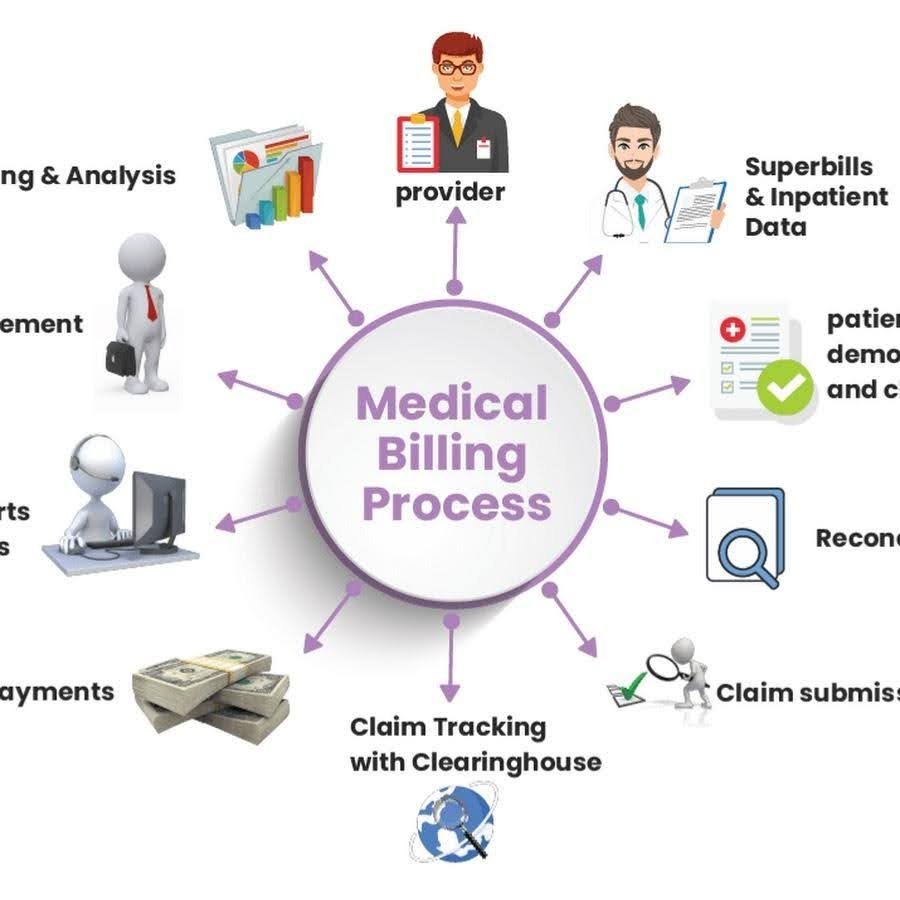
Healthcare providers spend their time and effort to ensure that they give quality care, but there is an issue that has always been prevalent among most of them: collection of payment. Late payments, rejected claims, late-paying patients, and insurance issues may have detrimental effects on the financial stability of clinics, hospitals, or any private practice. Today, the healthcare sector needs to ensure that its cash flow runs smoothly like its quality service provision.
Billing collections refer to the process of systematically collecting the overdue payments that are meant for the healthcare providers. Such a process involves several techniques that would help in streamlining revenue management and improve efficiency.
The Importance of Revenue Recovery in Healthcare
Revenue recovery is critical to healthcare providers since costs keep on rising. The costs involved include purchasing medical equipment, paying salaries, paying other expenses such as those relating to administration and processing insurance claims. If payments are delayed or non-existent, healthcare organizations could experience cash flow problems, which affect their ability to function and grow.
Some healthcare organizations have encountered difficulties when dealing with increased patient responsibilities in health expenditure. High deductibles and high co-payments lead to delayed payments or even non-payment of fees. Besides, some payments are not paid due to insurance claim denials and billing mistakes. Without a good way of recovering lost revenues, many healthcare organizations end up losing a lot of money every year.
Reducing Delayed Payments
One of the main strategies that is used to increase the speed of revenue recovery is minimizing payment delays. Payment delays may arise due to various reasons such as submission of inaccurate claims, wrong patient details, errors in coding, or lack of follow up by healthcare providers to insurance providers and clients.
Medical billing collection professionals keep track of the claims and resolve any challenges that might prevent a speedy and successful claim process. In this regard, they verify the eligibility of the patient, confirm that all the documents required are accurate and submit accurate claims to the insurance provider. As a result, there will be minimal cases of rejection of claims by insurance providers.
Furthermore, the medical billing collection professionals follow up on any outstanding payments from both insurance providers and patients, thereby avoiding any further delays in receiving payments. Communication with insurance providers and patients ensures that payment delays are avoided.
Improving Claim Accuracy
Claim submission must always be done accurately to hasten revenue recovery. Even minute coding mistakes can result in claim denials and delays in reimbursement. Claim collectors are experts at ensuring that all errors are corrected before submitting their claims.
They keep up with changes in the rules regarding insurance and coding procedures. They have the expertise to eliminate any errors that would otherwise disrupt payment cycles. Claim accuracy greatly improves their chances of being approved in one try and hastens the entire process of reimbursement.
It prevents unnecessary communication between healthcare providers and insurance companies. The result is faster processing and reimbursement.
Enhancing Patient Payment Collection
There is no doubt that patient payments have become an integral part of the revenue cycle in healthcare settings. Nowadays, with increasing out-of-pocket costs, healthcare providers rely on collecting patient balances. Yet, sometimes, it may be difficult to collect payments from people, especially if they do not know about their financial obligations or cannot afford them due to financial hardships.
Collection in medical billing helps healthcare providers handle patient balances successfully. For instance, collection specialists explain patient balances, the possible ways to pay them, and repayment schemes clearly. Such transparency promotes prompt payments and decreases any doubts concerning medical bills.
Moreover, most of the collection agencies can provide flexible payment schemes for patients, which makes it easier for them to settle their debts. In other words, such an approach increases the probability of recovering balances while preserving good relations with patients.
Minimizing Claim Denials
The fact of claims being denied is one of the biggest hurdles that come in the way of effective revenue collection. Denial of claims leads to delays in processing and resubmission. The delay caused by denied claims can ultimately end up turning into losses.
The medical bill collection team works effectively for denial management as they find out the causes for denials, fix the problems and re-submit the claims so that the flow of payments is not interrupted. They can also develop ways of preventing denials in the future after figuring out common denials.
Denial management enhances the effectiveness of the revenue collection process for hospitals by making sure that any denial does not result in loss of revenue.
Increasing Operational Efficiency
Healthcare professionals encounter a high volume of administrative tasks which may exceed the capacity of internal staff. Processing of billing, coding, insurance claims, and payments simultaneously consumes much time and necessitates extensive expertise. Administrative staff overburdened by the mentioned tasks results in delayed payment processes.
The use of third-party companies for handling medical collections is effective in making the work of healthcare institutions more efficient. Outsourcing the revenue recovery processes to professional collection agencies leaves more time for nurses and physicians to provide their patients with necessary medical treatment.
Third-party medical collectors use advanced billing technology, automation systems, and data analysis techniques to increase the efficiency of their work. Reminders and claim tracking systems become automated, increasing the speed of payment collection and minimizing the risk of errors.
Strengthening Cash Flow Management
Good cash flow is crucial for any medical care business. If an entity experiences cash flow challenges due to irregular payment streams, it will be difficult for it to fund new technologies, hiring processes, or provide top-quality health care services.
In order to ensure that cash flow is improved, medical billing collections play an important role in collecting payments on time. Collections specialists are able to monitor closely account payable information and recover outstanding accounts.
Improved cash flow means that healthcare companies have more certainty about their financial state. This way, it becomes possible to cover costs incurred in the course of operations and to make further investments into business.
Conclusion
It is an important factor in the recovery of money from patients and help healthcare institutions get back revenues quickly and operate stably financially. Claim submission, follow-up, denying claims, helping patients pay for the bills, and increasing efficiency will contribute to a better revenue recovery process.
With the rising costs of medical services and the complicated reimbursement schemes used by healthcare institutions nowadays, there is a need to implement efficient collection procedures that will allow providers to keep their finances healthy. Professional billing will not only optimize the financial situation, but will also allow healthcare companies to devote all their attention to their patients.
Healthcare today faces many challenges, and revenue recovery becomes especially important in the current environment. The investment in professional billing and collecting services can help any healthcare company succeed.