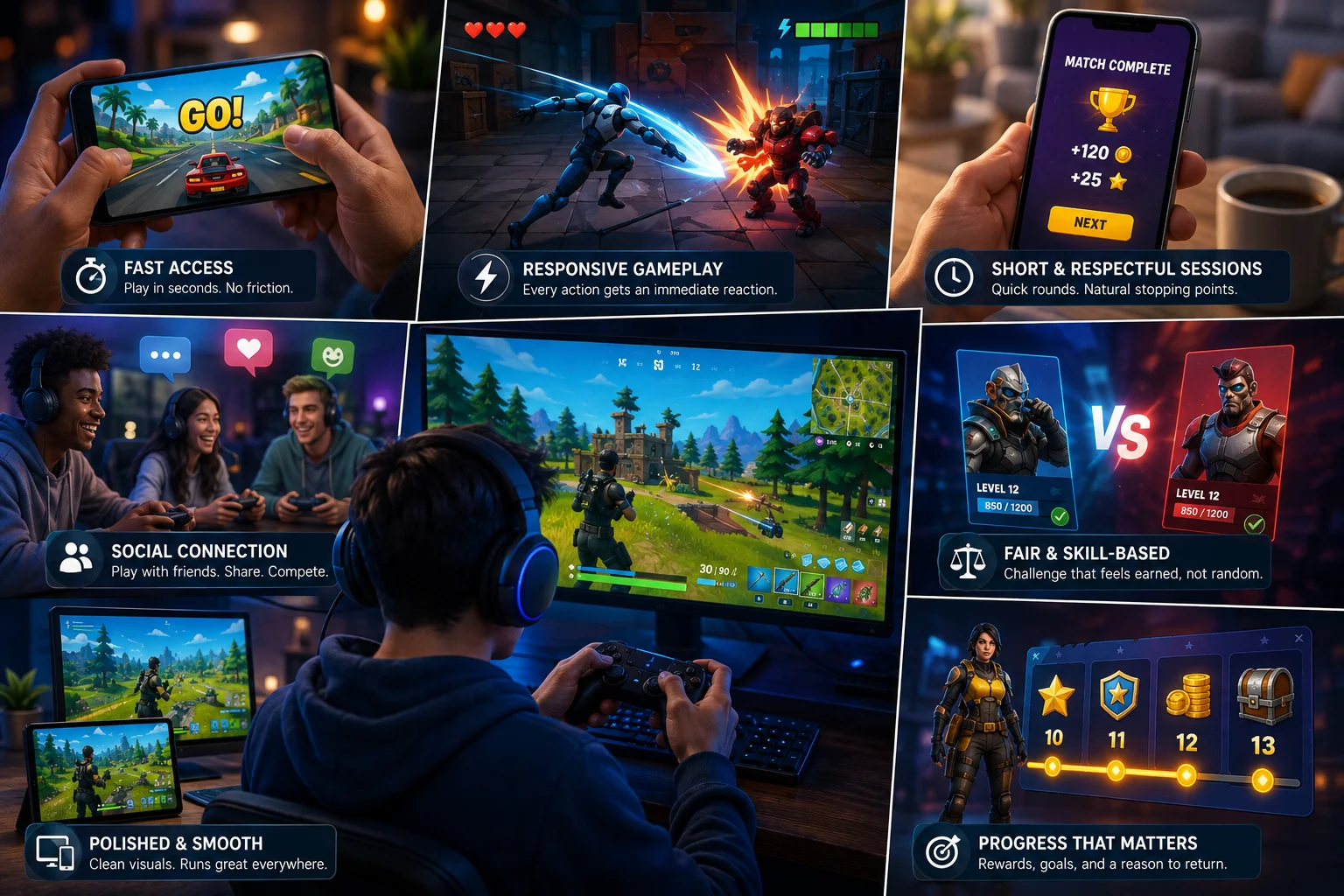
Player expectations have shifted quietly but significantly over the past several years, and a lot of games still get built around assumptions that no longer hold. Understanding what players actually look for now, rather than what used to matter most, is the difference between building something that resonates and something that quietly gets ignored.
Speed to Actually Playing
No Patience for Setup
Players today decide within seconds whether they’re going to stick around, and any friction before actual gameplay starts, downloads, account creation, lengthy tutorials, works directly against that narrow window. The expectation now is clicking a link and being in control almost immediately.
Instant Clarity About What to Do
Beyond just fast access, players expect to understand the core action within the first few seconds of play, without needing an explanation. If understanding the rules takes longer than experiencing them, most players have already moved on before they’ve even really started.
Genuine Responsiveness
Every Action Needs an Immediate Reaction
Players today are used to tight, responsive feedback from the games they already play regularly, which raises the baseline expectation for anything new they try. A game like Hitman Sniper 3D demonstrates this well, every input produces an immediate, clear result, exactly the kind of responsiveness players have come to expect as a baseline rather than a bonus.
Consistency Matters More Than Complexity
Players generally forgive a simple game with predictable, consistent controls far more readily than a complex one with inconsistent or delayed responses. Reliability in how a game reacts to input has become a bigger factor in player satisfaction than the depth of the underlying systems.
Respect for Limited Time
Short Sessions That Fit Real Schedules
Players increasingly expect games to respect how little uninterrupted time they actually have. Rounds that wrap up in five to ten minutes fit into the gaps that genuinely exist in most people’s days, a commute, a break, a few minutes before something else starts.
Clean Stopping Points Without Guilt
Beyond just short sessions, players look for natural moments to stop without feeling like they’re abandoning something mid-task. Games that create pressure to keep playing past a natural conclusion work against this expectation rather than with it.
Social Connection Built Into the Experience
Playing With Friends, Not Just Alongside Strangers
There’s a growing expectation that online games offer genuine ways to play with people you actually know, not just anonymous matchmaking. That social layer has become less of a bonus feature and more of a baseline expectation for many casual and competitive games alike.
Something Worth Comparing or Sharing
Players increasingly look for games that give them a reason to send a link to a friend or compare a score, some form of social hook that extends the experience beyond a single solitary session.
Fairness Over Difficulty for Its Own Sake
Challenge That Feels Earned, Not Arbitrary
Players today are quick to abandon games where failure feels random or unfair, regardless of how polished everything else is. The expectation isn’t that games be easy, it’s that difficulty feels connected to skill and understandable in the moment it happens.
A Real Chance for Newer Players
Games that heavily reward years of accumulated experience without giving newer players a genuine shot at success increasingly struggle to hold casual audiences. Balancing skill and accessibility has become a stronger expectation than it used to be, especially in casual and social gaming spaces.
Visual and Mechanical Polish, Even in Simple Games
Polish Doesn’t Mean Complexity
Players don’t necessarily expect elaborate visuals, but they do expect whatever visual style a game has to feel intentional and finished rather than rough or unfinished. A simple, clean aesthetic executed well tends to satisfy this expectation just as effectively as something visually ambitious.
Smooth Performance Across Devices
With so much online play happening on phones during short breaks, players increasingly expect a game to run just as smoothly on mobile as it does on a larger screen, without noticeable lag or awkward control adaptation.
Why These Expectations Have Shifted
Comparison Against an Ever-Growing Baseline
Every new game players try gets compared against the best examples of responsiveness, accessibility, and polish they’ve already experienced elsewhere, regardless of a specific game’s budget or team size. That constantly rising baseline is part of why expectations feel higher than they did even a few years ago.
Casual Audiences Have Grown Significantly
As more people who don’t identify as traditional gamers have started playing online games regularly, the overall expectations of the audience have shifted toward accessibility and low commitment, away from the more tolerant, dedicated expectations of a purely hardcore player base.
Faster Development Has Raised the Bar
As game maker online platforms make it easier for more creators to produce polished, responsive games quickly, players are simply encountering well-made experiences more often, which raises what they expect from everything else they try afterward.
What This Means for Anyone Building an Online Game
Prioritize the First Thirty Seconds
Whatever effort is available should weight heavily toward making the earliest moments of the experience clear, responsive, and immediately engaging, since that’s when most players decide whether to continue.
Respect Time as a Design Constraint, Not an Afterthought
Session length and natural stopping points deserve the same deliberate design attention as the core mechanic itself, not something addressed only after everything else is finished.
Build Social Features In From the Start
Rather than treating social or comparison features as optional additions, consider them a core part of what players now expect from an online experience worth returning to.
Final Thoughts
What players look for in today’s online gaming experiences has shifted toward speed, responsiveness, respect for their time, and genuine social connection, expectations shaped by a constantly rising baseline set by the best games they’ve already played. Meeting these expectations doesn’t require elaborate complexity, it requires deliberate attention to the specific things players have quietly come to expect as standard, regardless of a game’s scope or size.