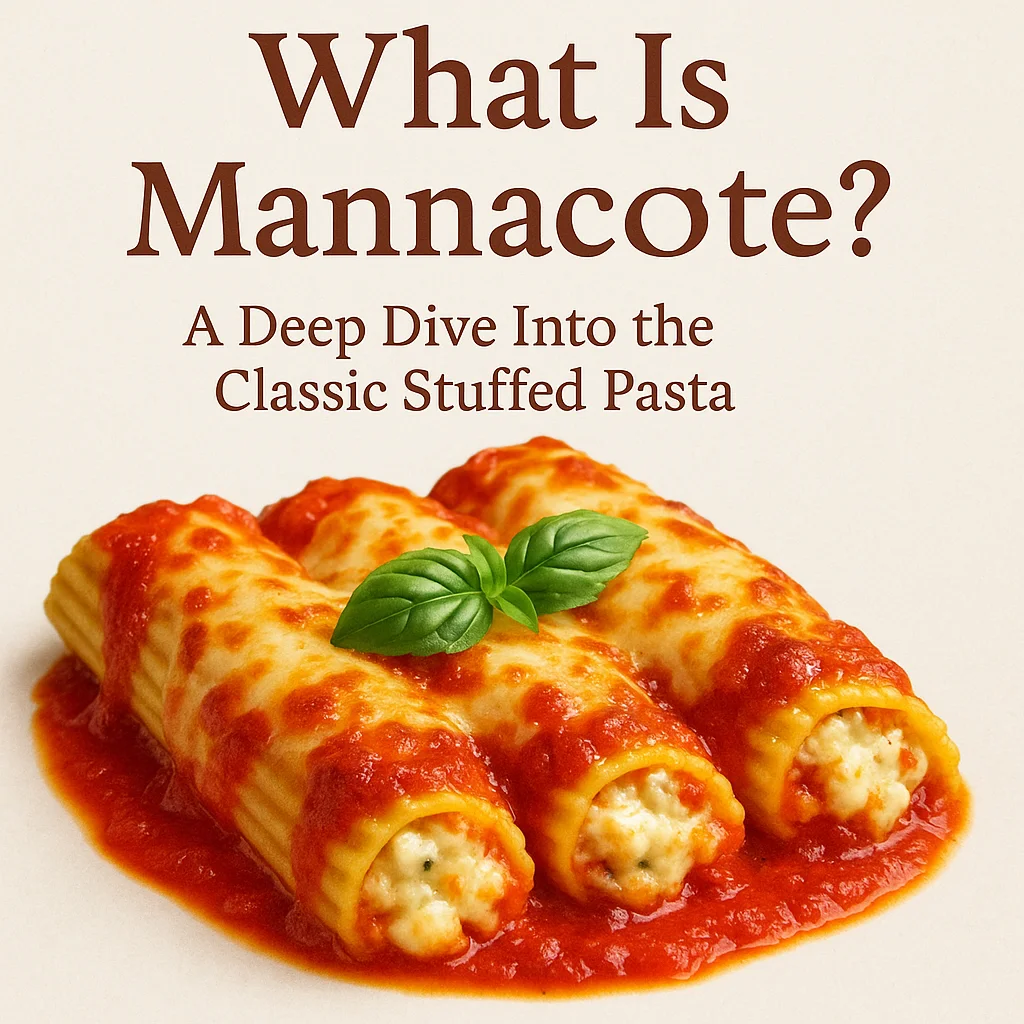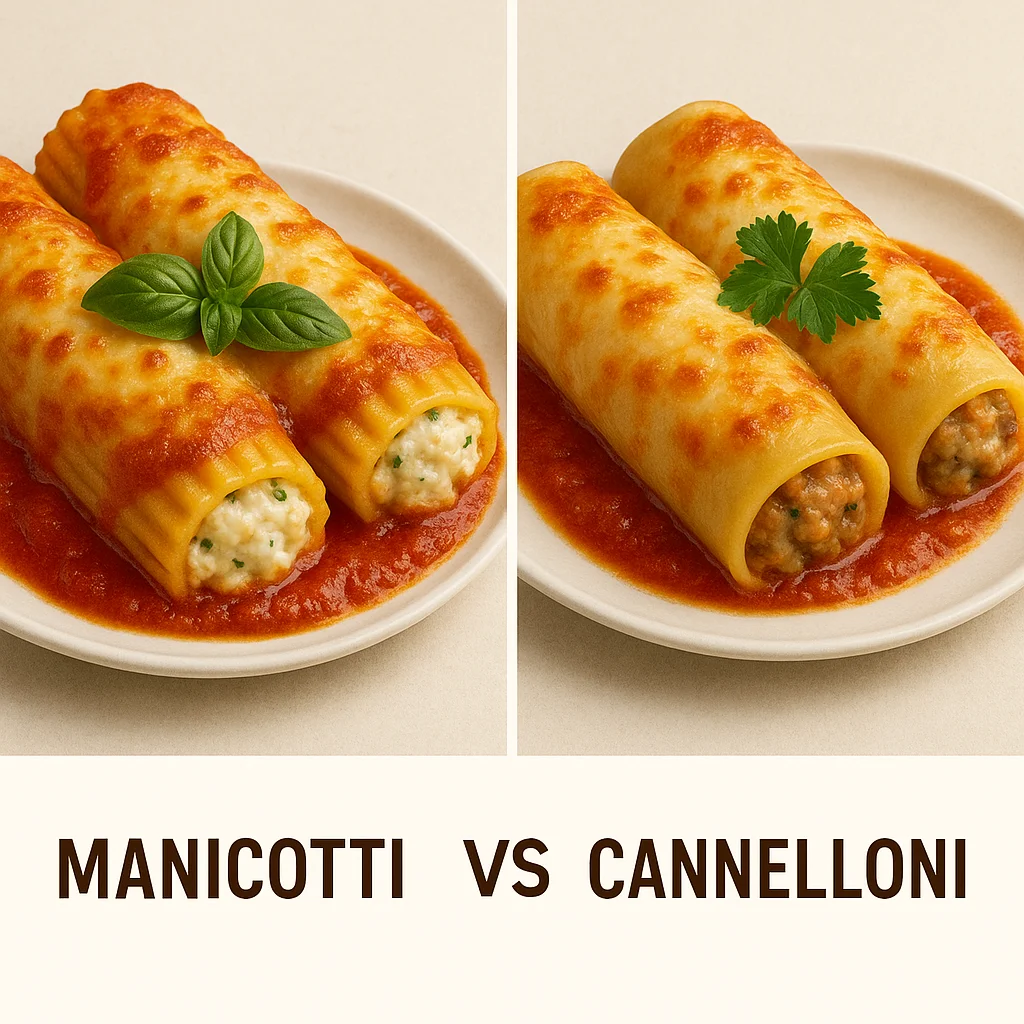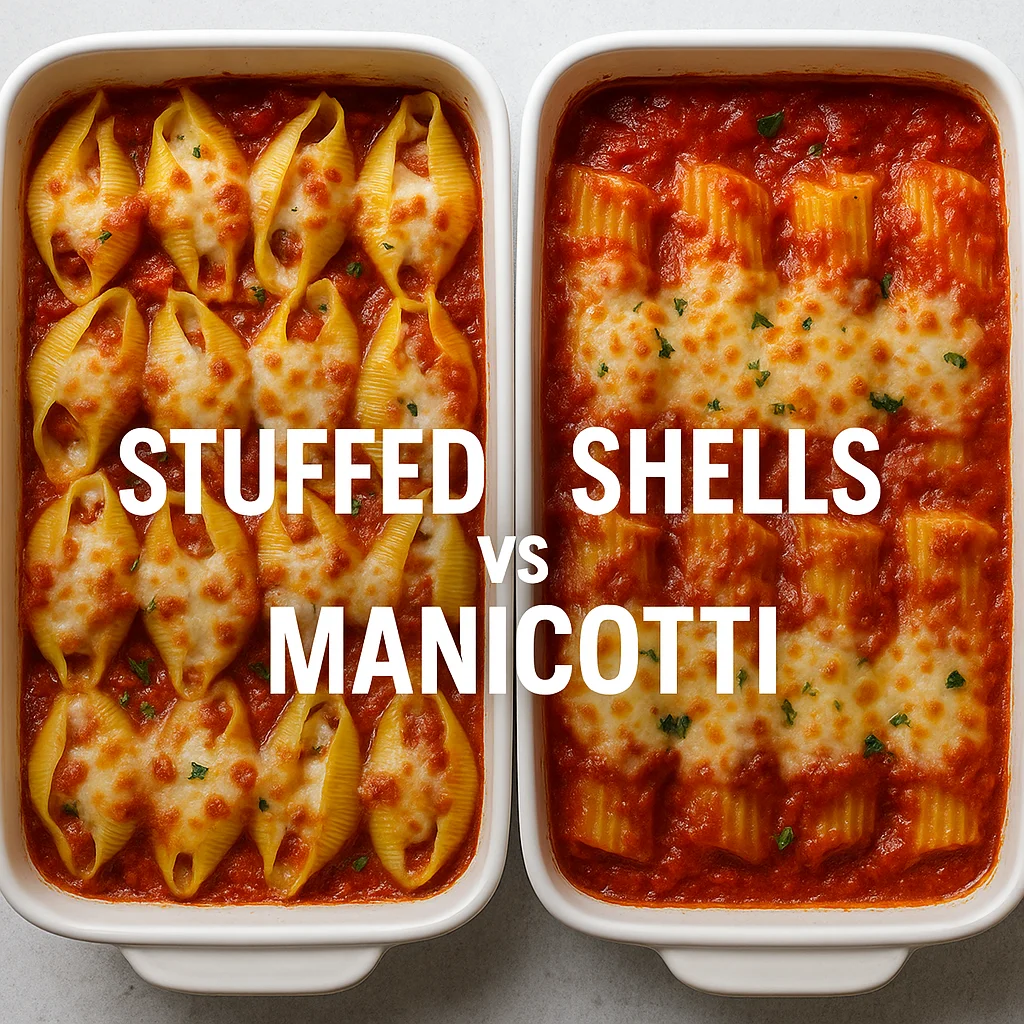
Stuffed shells and manicotti are baked pasta dishes made by filling pasta with cheese, meat, vegetables, or a combination of ingredients before covering it with sauce. Their overall preparation is similar, but the pasta shapes create noticeable differences in filling, assembly, texture, and presentation.
The direct difference is simple: stuffed shells use large, open, seashell-shaped pasta, while manicotti uses long, hollow pasta tubes. Stuffed shells are generally easier to fill because their centers are fully accessible. Manicotti requires more careful handling but produces neat, evenly shaped portions.
Stuffed Shells vs Manicotti: Quick Comparison
| Feature | Stuffed Shells | Manicotti |
| Pasta shape | Large, curved seashells | Long, hollow tubes |
| Opening | Broad and exposed | Open at both ends |
| Filling method | Spoon or piping bag | Usually a piping bag |
| Ease of filling | Generally easier | Requires more care |
| Filling distribution | Concentrated in the center | Spread along the tube |
| Baked texture | Curved folds with possible firmer edges | More uniform pasta-to-filling layers |
| Sauce coverage | Sauce settles around and inside the shells | Sauce surrounds the tubes |
| Presentation | Individual shell-shaped portions | Uniform rows of filled tubes |
| Substitution | Can replace manicotti in most baked recipes | Can replace shells if the filling can be piped |
| Make-ahead use | Suitable | Suitable |
| Freezer use | Freezes well when assembled | Freezes well when assembled |
What Are Stuffed Shells?
Stuffed shells are made with jumbo shell pasta, commonly known as conchiglioni. Each piece has a broad opening, curved body, and ridged exterior designed to hold filling and sauce.
The shells are normally boiled until flexible, drained, and cooled before filling. Their open shape allows the filling to be added with a regular spoon, although a piping bag can also be used. Once filled, the shells are arranged in a sauced baking dish and covered with additional sauce and cheese.
Because the center remains visible, it is easy to judge how much filling each shell contains. The shape also accommodates mixtures containing noticeable pieces of vegetables, cooked meat, or mushrooms.
What Is Manicotti?
Manicotti is a large, tube-shaped pasta intended to be filled and baked. Dried manicotti commonly has a ridged exterior, although its exact size and texture vary by manufacturer.
The filling must be inserted through one or both ends of the tube. A piping bag or a resealable food-storage bag with one corner removed usually makes this easier than using a spoon. The filled tubes are then placed side by side in a baking dish and covered with sauce.
Some Italian-American manicotti recipes use thin crespelle, or crepes, instead of dried pasta tubes. Crespelle manicotti has a softer wrapper and a different texture, so it should not be treated as identical to boxed manicotti pasta.
The Main Difference Is the Pasta Shape
Shape is the defining difference between stuffed shells and manicotti.
A jumbo shell curves around the filling without enclosing it completely. Its broad opening faces upward or slightly to the side, allowing sauce to settle around the filling and inside the pasta’s folds.
Manicotti encloses the filling inside a cylinder. The filling is usually visible only at the two ends, while the pasta forms a continuous layer around it.
This structural difference affects how the dishes are prepared and eaten. Stuffed shells create compact portions with pasta folded around a central pocket. Manicotti creates longer portions with the filling distributed from one end of the tube to the other.
Do Stuffed Shells and Manicotti Use the Same Filling?
The same filling can be used for stuffed shells and manicotti. A typical cheese mixture may contain ricotta, mozzarella, Parmesan, herbs, seasoning, and sometimes egg as a binder.
Other suitable combinations include:
- Ricotta and cooked spinach
- Ricotta and roasted vegetables
- Cooked ground beef with cheese
- Cooked Italian sausage and ricotta
- Mushroom and cheese
- Shredded cooked chicken with spinach
- Squash or pumpkin with ricotta
Filling consistency matters more when preparing manicotti. A smooth three-cheese manicotti filling is easier to pipe through the entire tube, while stuffed shells can hold a chunkier mixture.
Large vegetable pieces, coarse meat, and long strands of spinach can obstruct a piping bag or prevent the filling from reaching the center of a manicotti tube. Chop these ingredients finely when using them in manicotti.
Moisture-rich vegetables should be cooked and thoroughly drained before being mixed with ricotta. Any meat included in the filling should also be cooked and drained before the pasta is assembled.
Which One Is Easier to Prepare?
Stuffed shells are generally easier to prepare because their centers are open. A cooled shell can be held in one hand while the filling is added with a spoon.
Manicotti requires more control. The tubes can split if they become too soft during boiling, and filling them with a spoon may be slow. A piping bag distributes the mixture more efficiently and reduces the amount of handling.
For easier assembly with either pasta:
- Cook the pasta only until flexible or slightly firmer than fully tender, following the package directions for baked dishes.
- Stir gently to prevent the pieces from sticking together.
- Drain the pasta without pressing or piling it.
- Separate the pieces while they cool.
- Prepare several extra shells or tubes in case some tear.
- Let the pasta cool enough to handle before filling.
- Place sauce in the bottom of the dish before adding the pasta.
Stuffed shells are particularly practical when the filling contains chopped vegetables or meat. Manicotti is more manageable when the filling is smooth enough to pipe.
How Their Textures Compare
The ingredients and cooking time determine most of the final texture, but pasta shape also influences each bite.
Stuffed shells create several folds around a concentrated pocket of filling. Areas fully covered with sauce remain tender, while exposed ridges may become slightly firmer during baking. One serving can contain soft pasta, creamy filling, sauced folds, and lightly browned edges.
Manicotti provides a more consistent structure. The pasta surrounds the filling along the full length of the tube, creating a relatively even pasta-and-filling cross-section when cut.
Neither shape is automatically thicker or more tender. Pasta thickness varies among brands, and both shapes can become overly soft if they are fully cooked before going into the oven. Initial boiling should make the pasta flexible enough to fill without completing the entire cooking process, unless the package specifies a different method.
Which Sauces Work Best?
Tomato-based sauces work with both stuffed shells and manicotti because they supply moisture and balance rich cheese fillings. Marinara is the standard choice, but several other sauces can be used.
Marinara Sauce
Marinara pairs with cheese, spinach, mushroom, and meat fillings. Its relatively loose consistency allows it to spread beneath, around, and over the pasta.
Meat Sauce
A cooked beef or sausage sauce adds a savory component to a simple ricotta filling. Meat sauce should contain enough liquid to protect the pasta during baking rather than consisting mainly of dry pieces of meat.
Tomato-Cream or Vodka Sauce
A tomato-cream sauce offers a smoother and milder finish than regular marinara. It works particularly well with cheese, chicken, spinach, or mushroom fillings.
Béchamel
Béchamel can be used by itself or layered with tomato sauce. It suits cheese, vegetable, mushroom, and chicken fillings but should remain loose enough to coat the pasta evenly.
Alfredo-Style Sauce
A cream-based sauce can accompany either shape, especially when the filling contains chicken, spinach, or vegetables. Because the sauce and cheese filling are both rich, the seasoning and serving size should be balanced accordingly.
The same sauces for manicotti generally work with stuffed shells. The important requirement is using enough sauce to keep the pasta moist throughout baking.
Regardless of the sauce selected, spread some across the bottom of the baking dish before adding the filled pasta. Cover the pasta adequately so its edges do not dry out in the oven.
Can You Substitute Stuffed Shells for Manicotti?
Jumbo shells can replace manicotti in most baked pasta recipes without requiring a different filling or sauce.
The substitution should be based on the capacity of the baking dish and the amount of prepared filling rather than an exact piece-for-piece exchange. A jumbo shell and a manicotti tube do not necessarily hold the same quantity.
To use stuffed shells in a manicotti recipe:
- Prepare the original filling and sauce.
- Boil enough jumbo shells to cover the baking dish.
- Add the filling with a spoon or piping bag.
- Arrange the shells closely over a layer of sauce.
- Add the remaining sauce and cheese.
- Follow the recipe’s visual baking cues instead of assuming the cooking time will be identical.
Jumbo shells are an especially useful substitute when the filling contains pieces that are too large to pass easily through a piping bag.
Can You Substitute Manicotti for Stuffed Shells?
Manicotti can replace jumbo shells, but the filling may need to be adjusted.
Chop cooked meat and vegetables into small pieces so the mixture can pass through a piping bag. If the filling is too stiff to travel along the tube, pipe it from both ends rather than forcing it through from one side.
Arrange the filled tubes in a single layer with sauce underneath and on top. Do not substitute them according to the number of shells listed in the original recipe. Instead, use enough manicotti to fill the available baking dish and distribute the filling evenly.
Oven-ready tubes require different amounts of sauce and different cooking times from boiled pasta. When using this type, follow a tested no-boil manicotti recipe rather than applying directions written for precooked shells.
No-boil lasagna sheets can also be softened, filled, and rolled. The result will resemble cannelloni or lasagna rolls rather than dried manicotti tubes, but it can provide a similar combination of pasta, filling, and sauce.
Which Pasta Holds More Filling?
There is no fixed answer because jumbo shells and manicotti vary in size among manufacturers. A manicotti tube holds filling along a greater length, while a jumbo shell holds a compact mound in its center.
The amount added by the cook also changes the final ratio. Overfilling either shape can cause the pasta to tear or allow the mixture to spill into the sauce.
For more consistent portions, divide the prepared filling approximately by the number of usable pasta pieces. Keep several extra cooked shells or tubes available because some may split during boiling or filling.
How to Prevent the Pasta from Tearing
Both shapes become fragile after boiling, although manicotti can be harder to handle because of its length and enclosed structure.
These preparation steps can reduce breakage:
- Use a large pot that gives the pasta room to move.
- Stir gently during the first part of cooking.
- Avoid cooking the pasta beyond the package’s recommendation for baked dishes.
- Drain it without pressing the pieces together.
- Place the pasta in a single layer while it cools.
- Use a piping bag instead of repeatedly inserting a spoon into manicotti.
- Support each tube in your hand while filling it.
- Do not force a stiff or chunky mixture through a narrow opening.
- Prepare a few more pieces than the recipe requires.
A partially torn stuffed shell can often still be used by positioning the damaged side against another shell. A severely split manicotti tube is more difficult to fill neatly.
Make-Ahead Instructions
Stuffed shells and manicotti are both suitable for advance preparation.
To make either dish ahead:
- Cook and cool the pasta.
- Prepare the filling and sauce.
- Spread sauce over the bottom of the baking dish.
- Fill and arrange the pasta.
- Add the remaining sauce and cheese.
- Cover the dish tightly.
- Refrigerate it until ready to bake.
Assembling the dish one day before baking is a practical option. Keep it refrigerated rather than leaving filled pasta at room temperature.
A refrigerated casserole may require a little more oven time than a freshly assembled one. If using a glass baking dish, follow its manufacturer’s temperature guidance and avoid transferring very cold glass directly into a hot oven.
Can You Freeze Stuffed Shells and Manicotti?
Both dishes can be frozen. Assembling and freezing them before baking usually provides better control over the final texture because the pasta is heated only once.
To freeze either dish:
- Select a freezer-safe baking dish or container.
- Allow cooked filling ingredients and sauce to cool.
- Spread sauce across the bottom of the container.
- Add the filled pasta.
- Cover it with the remaining sauce and cheese.
- Seal the container tightly to limit air exposure.
- Label and freeze the unbaked dish.
Thaw the covered casserole in the refrigerator before baking whenever possible. A thawed dish heats more evenly than one placed directly into the oven from the freezer.
If the selected recipe permits baking from frozen, keep the dish covered during the first part of cooking and allow additional baking time. The center must be thoroughly heated before serving. Exact timing depends on the dish size, oven, sauce, filling, and whether the pasta was thawed.
Previously baked portions can also be frozen, although the pasta may soften slightly after reheating. Adding sauce and using a covered heating method can help prevent dryness. These manicotti reheating methods can also be applied to similar portions of stuffed shells.
Stuffed Shells or Manicotti: Which Should You Make?
Choose stuffed shells when:
- You want pasta that is easier to fill with a spoon.
- The filling contains chopped meat or vegetables.
- You want flexible individual portions.
- You prefer a combination of soft folds and firmer ridges.
- You want to see and adjust the filling in every piece.
Choose manicotti when:
- You want evenly shaped pasta portions.
- The filling is smooth enough to pipe.
- You prefer filling distributed along a tube.
- You want the pasta arranged in uniform rows.
- You do not mind taking additional care during assembly.
The decision does not require a completely different recipe. The same filling, sauce, and cheese topping can often be used with either pasta. Shape, filling method, and the distribution of ingredients are the meaningful differences.
Frequently Asked Questions
Are stuffed shells and manicotti the same?
No. They are similar filled and baked pasta dishes, but they use different pasta shapes. Stuffed shells use large, curved shells, while manicotti uses long tubes.
Do stuffed shells and manicotti taste the same?
They can taste similar when prepared with the same sauce, filling, and cheese. The main difference is how the pasta, filling, and sauce are distributed in each bite.
Can I use the same ricotta filling in both?
Yes. A standard ricotta mixture can be used for either shape. Ingredients may need to be chopped more finely when the mixture will be piped into manicotti.
Which one is easier to fill?
Stuffed shells are generally easier because their centers are exposed. A piping bag makes manicotti much easier to fill than a regular spoon.
Can I use jumbo shells if I cannot find manicotti?
Yes. Use enough jumbo shells to hold the available filling and cover the baking dish. The substitution does not need to be piece for piece.
Should the pasta be fully cooked before filling?
Usually, the pasta should be cooked only until flexible or slightly firmer than fully tender because it will continue cooking in the sauce. Always consider the instructions on the pasta package and the specific recipe.
Which pasta is better for a chunky filling?
Stuffed shells are more suitable for chunky fillings because ingredients can be spooned directly into their broad openings. Manicotti works better with a finely chopped or smooth filling.
Which one is better for freezing?
Both are suitable for freezing. Assemble the pasta with its sauce, cover it tightly, and freeze it before baking for a convenient make-ahead meal.
Final Comparison
The difference between stuffed shells and manicotti comes down to pasta shape and the practical effects of that shape. Stuffed shells have broad openings that make them easier to fill and better suited to textured mixtures. Manicotti encloses a smoother filling inside long tubes and produces more uniform portions.
Neither requires a completely different filling or sauce. If one shape is unavailable, the other can usually replace it with minor adjustments to filling consistency, portion count, and assembly.