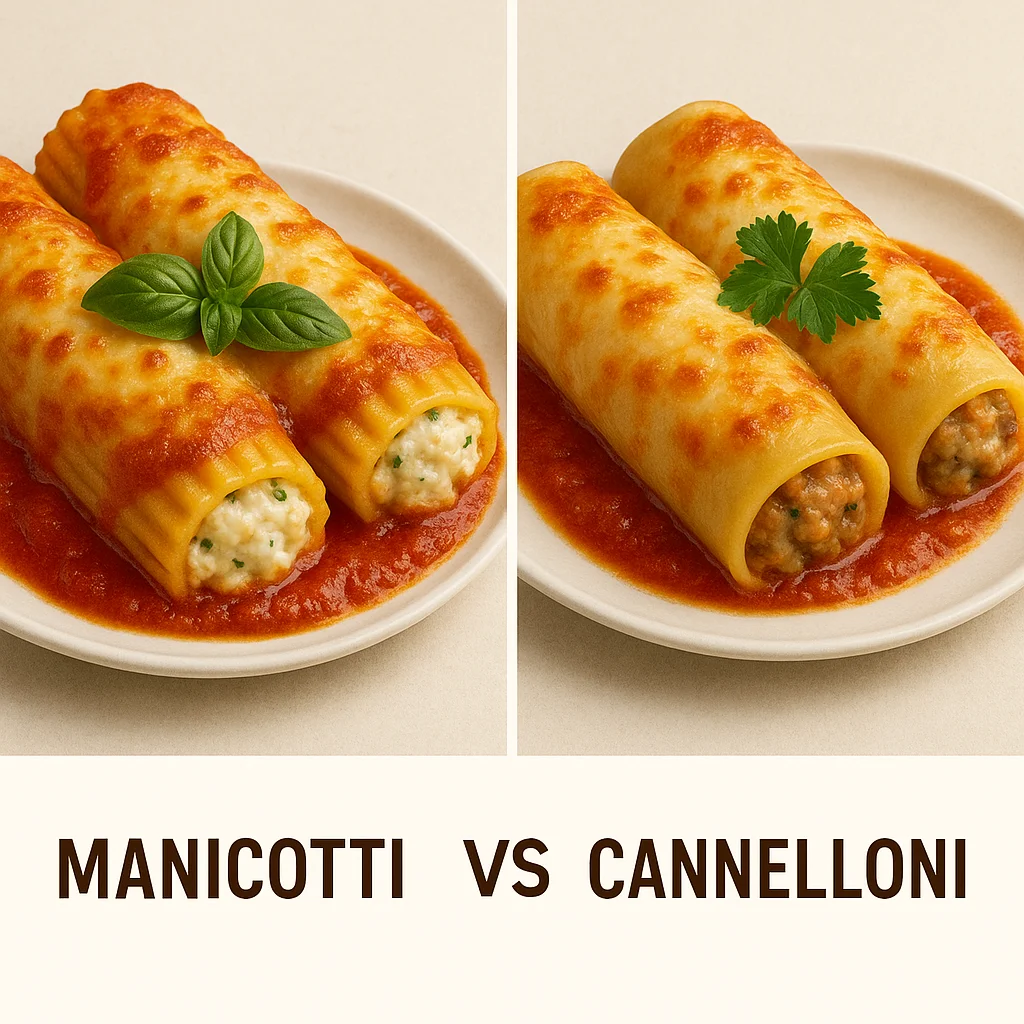
Manicotti and cannelloni are closely related baked pasta dishes. Both consist of cylindrical pasta filled with cheese, meat, vegetables, or a combination of ingredients, covered with sauce, and baked. The terms are sometimes used interchangeably, particularly in the United States, but the pasta used to prepare them is not always the same.
The most practical difference is that manicotti in the United States usually refers to large, preformed pasta tubes, often with ridges, while cannelloni commonly refers to smooth tubes or rectangular pasta sheets rolled around a filling. Fillings and sauces overlap considerably, so the distinction depends more on pasta form, preparation method, and regional terminology than on a fixed recipe.
Manicotti vs Cannelloni: Quick Comparison
| Feature | Manicotti | Cannelloni |
| Common usage | Primarily Italian-American | Italian and international |
| Typical pasta form | Large, preformed tubes | Smooth tubes or rolled pasta sheets |
| Surface | Often ridged | Often smooth |
| Filling method | Piped into the tube | Piped into tubes or rolled inside sheets |
| Precooking | Many dried tubes require boiling | Depends on whether the pasta is fresh, dried, precooked, or oven-ready |
| Common fillings | Ricotta, mozzarella, Parmesan, spinach, or cooked meat | Ricotta and spinach, minced meat, ragù, vegetables, or cheese |
| Common sauces | Tomato sauce, meat sauce, or cream-based sauce | Tomato sauce, béchamel, ragù, or a combination |
| Finished shape | Uniform enclosed cylinder | Preformed or hand-rolled cylinder |
| Substitution | Can usually replace cannelloni | Can usually replace manicotti |
These descriptions reflect common usage rather than absolute rules. Pasta manufacturers and regional recipes do not apply the names consistently, so package instructions remain important.
What Is Manicotti?
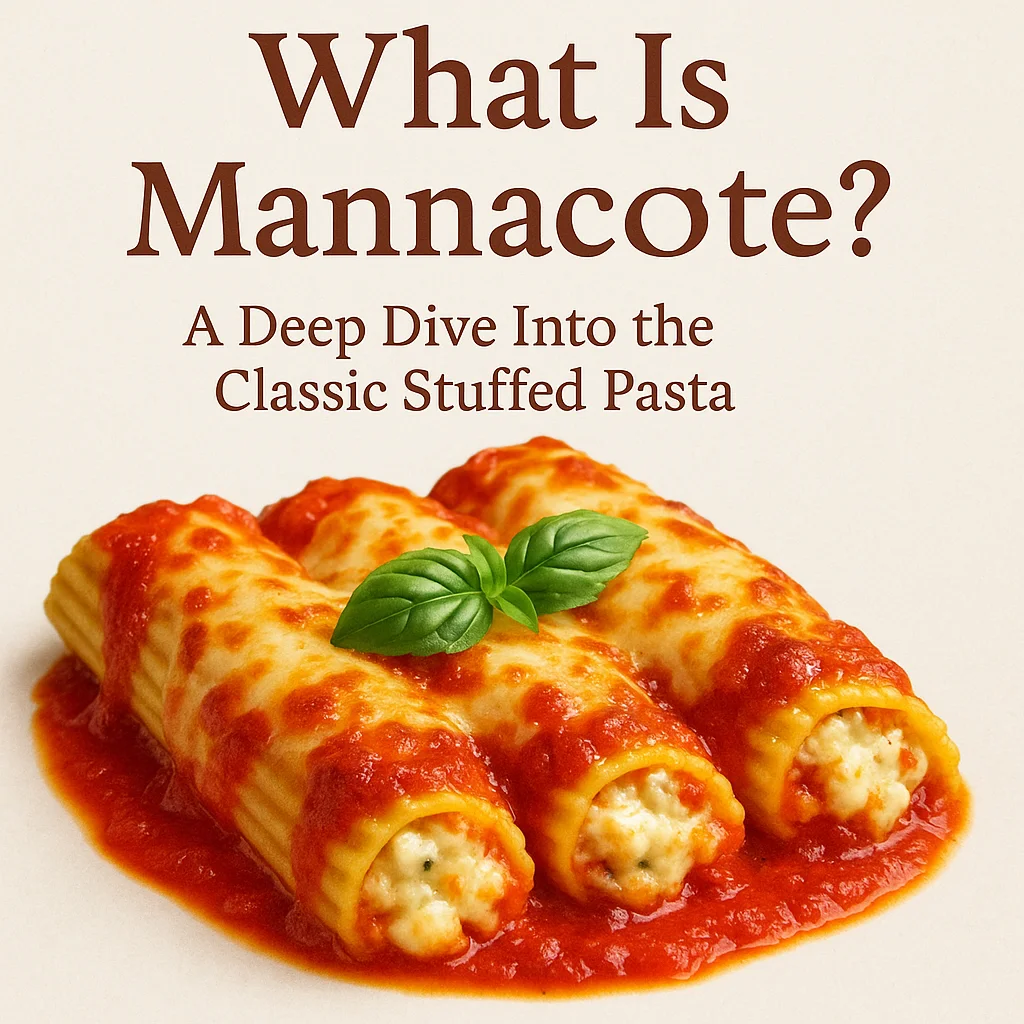
Manicotti is a filled and baked pasta dish widely associated with Italian-American cooking. Its name relates to the sleeve-like shape of the pasta.
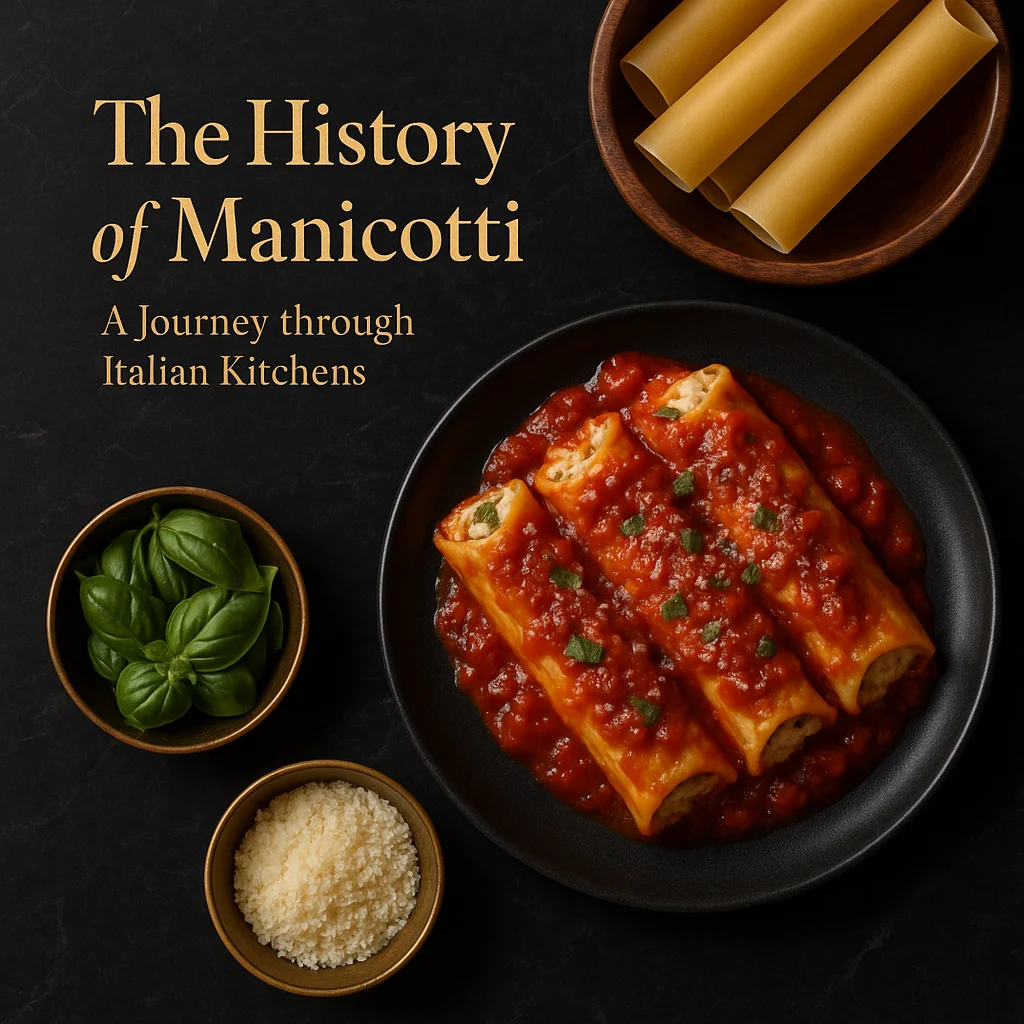
Commercial manicotti commonly sold in American grocery stores consists of large dried tubes that are:
- Open at both ends
- Wide enough to hold a substantial filling
- Often ridged on the exterior
- Uniform in length and diameter
- Designed to be covered with sauce and baked
A typical classic manicotti recipe combines the tubes with a ricotta-based filling, tomato sauce, mozzarella, and Parmesan. Spinach, cooked meat, mushrooms, and other vegetables may also be added.
Many dried manicotti tubes require partial boiling before they can be filled. Other products are formulated for no-boil preparation. The correct method depends on the pasta rather than the dish’s name.
Some Italian-American family recipes use thin crespelle instead of dried pasta tubes. The crepes are filled, rolled, covered with sauce, and baked in much the same way, but they produce a softer wrapper and a noticeably different texture.
What Is Cannelloni?
Cannelloni is an Italian filled pasta preparation made by enclosing a savory filling inside a cylindrical pasta form and baking it with sauce.
The cylinder can be created in two main ways:
- Filling a manufactured cannelloni tube
- Rolling a rectangular pasta sheet around the filling
Fresh egg-pasta sheets are commonly used for rolled cannelloni, but dried tubes are also widely available. Cannelloni should therefore not be defined exclusively as either rolled sheets or factory-made tubes.
Depending on the product, the pasta may be:
- Filled while fresh
- Boiled or softened before filling
- Sold in a precooked form
- Designed to cook directly in the sauce
Cannelloni is commonly filled with ricotta and spinach, cooked minced meat, ragù, mushrooms, or other vegetables. It may be covered with tomato sauce, béchamel, meat sauce, or a combination of sauces before baking.
The Main Difference: Preformed Tubes vs Rolled Sheets
The clearest difference between manicotti and cannelloni concerns how the cylinder is formed.
Preformed Manicotti Tubes
Dried manicotti is typically manufactured as a complete tube. Once softened, the filling is inserted through one or both open ends.
Preformed tubes provide consistent portions because each piece has approximately the same length and diameter. Their enclosed shape works best with a smooth filling that can move through a piping bag.
Cannelloni Tubes
Cannelloni can also be sold as complete tubes. These are frequently smooth rather than ridged, although surface texture varies among manufacturers.
Some dried cannelloni tubes are filled without boiling and cook in the baking sauce. Others require preliminary cooking. The packaging should determine the method.
Rolled Cannelloni Sheets
Cannelloni can be prepared from rectangular pasta sheets. The filling is placed in a line across each sheet, and the pasta is rolled around it to form a cylinder.
This method provides direct access to the filling and can accommodate mixtures containing larger pieces of cooked meat or vegetables. It also allows the cook to adjust the size of each portion.
Crespelle Manicotti
Some versions of manicotti use thin crepes instead of pasta. The filling is placed across each crespella before it is rolled and arranged in a baking dish.
A crespelle manicotti preparation should be treated as a variation rather than the universal definition of manicotti. Its wrapper is softer than dried pasta and does not require the same boiling or handling process.
Do Manicotti and Cannelloni Use Different Fillings?
Fillings do not create a strict dividing line between manicotti and cannelloni. Most fillings can be used in either dish.
Common options include:
- Ricotta, mozzarella, and Parmesan
- Ricotta and cooked spinach
- Cooked ground beef
- Beef and pork
- Cooked Italian sausage
- Mushrooms and cheese
- Roasted vegetables
- Cooked chicken with spinach
- Squash or pumpkin with ricotta
Italian-American manicotti is frequently associated with ricotta-based fillings. Cannelloni recipes commonly feature either ricotta and spinach or cooked meat, but neither combination belongs exclusively to one dish.
The pasta form affects which filling consistency is easiest to use. A smooth manicotti filling can be piped through a narrow tube. A coarser mixture is easier to place on a flat pasta sheet before rolling.
When filling preformed tubes:
- Chop cooked meat and vegetables finely.
- Drain spinach and other moisture-rich ingredients.
- Mix the ingredients evenly.
- Avoid large pieces that can block a piping bag.
- Do not force excessive filling into the pasta.
Any meat included in the filling should be cooked and drained before the dish is assembled.
How the Sauces Compare
Manicotti and cannelloni can use many of the same sauces. The filling and preparation style usually influence the sauce choice more than the pasta name.
Tomato Sauce
Marinara and other tomato sauces work with cheese, spinach, vegetables, and meat. Their moisture helps the pasta finish cooking in the oven.
A layer of tomato sauce should be placed beneath the pasta to reduce sticking and protect the bottom from drying.
Ragù or Meat Sauce
A meat-based sauce can accompany a cheese filling or reinforce a meat-filled version. It should contain enough liquid to surround the pasta rather than consisting mainly of dry meat.
Béchamel
Béchamel is often used with cannelloni, particularly in preparations containing meat, spinach, mushrooms, or cheese. It may be applied alone or combined with tomato sauce or ragù.
Tomato-Cream Sauce
Tomato-cream and vodka-style sauces can be used with cheese, spinach, mushroom, chicken, and vegetable fillings. They work with both pasta forms.
Cream-Based Sauce
A cream-based sauce may suit chicken, mushroom, spinach, or cheese fillings. Because the filling and sauce can both be rich, seasoning and portion size should be balanced.
The same sauces for manicotti can generally be used for cannelloni. Whichever sauce is selected, the pasta should be covered adequately to retain moisture during baking.
How Manicotti Is Prepared
The standard method for dried manicotti involves softening the tubes, preparing the filling, assembling the dish, and baking it with sauce.
A typical process is:
- Cook the tubes according to their package instructions.
- Drain them gently before they become overly soft.
- Separate the tubes so they do not stick together.
- Allow them to cool enough to handle.
- Pipe the filling into both ends.
- Spread sauce across the bottom of a baking dish.
- Arrange the filled tubes in a single layer.
- Cover them with additional sauce and cheese.
- Bake until the pasta is tender and the filling is thoroughly heated.
Boiling the tubes too long can make them difficult to fill without tearing. Preparing a few extra pieces is useful because some may split during cooking or assembly.
Oven-ready products require a different balance of liquid and cooking time. When using them, follow a tested no-boil manicotti recipe rather than applying instructions written for precooked tubes.
How Cannelloni Is Prepared
Cannelloni preparation depends on whether the recipe uses tubes or pasta sheets.
Using Cannelloni Tubes
Check the package to determine whether the tubes require boiling. Fill them with a piping bag, arrange them in sauce, and cover them completely before baking.
Uncooked tubes need sufficient liquid to soften evenly. Reducing the sauce without adjusting the preparation method may leave the pasta firm or dry.
Using Pasta Sheets
Fresh sheets may be ready to use, while dried sheets may need boiling or soaking.
To assemble rolled cannelloni:
- Lay a prepared sheet on a clean surface.
- Place the filling in a line near one edge.
- Roll the sheet around the filling.
- Avoid compressing or overfilling the cylinder.
- Position it seam-side down in the baking dish.
- Repeat until the dish is filled.
- Cover the rolls with sauce before baking.
Placing the seam underneath helps the cannelloni remain closed as it cooks.
Texture Differences
Manicotti is not automatically thicker, firmer, or heavier than cannelloni. The final texture depends on the pasta product and preparation method.
Important factors include:
- Dried pasta versus fresh pasta
- Pasta-sheet thickness
- Ridged versus smooth surfaces
- The amount of preliminary cooking
- Sauce consistency and coverage
- Baking time
- Whether crespelle is used
A dried, ridged manicotti tube may have a firmer bite than a thin sheet of fresh pasta. Rolled fresh cannelloni may feel more delicate because the wrapper can be thinner.
Dried cannelloni tubes, however, may produce almost the same texture as commercial manicotti. Crespelle creates another result entirely because it is softer and more tender than either dried pasta shape.
The accurate comparison is between the products being cooked, not a universal claim that one dish is always softer or more refined.
Regional Terminology
Terminology accounts for much of the confusion between manicotti and cannelloni.
Cannelloni is the established Italian and internationally recognized term for filled cylindrical pasta. It can refer to pasta sheets rolled around a filling or to manufactured tubes.
Manicotti is especially common in the United States and Italian-American cooking. It may describe the dried pasta tubes, the finished baked dish, or a crespelle-based family preparation.
American grocery stores and recipes sometimes use manicotti and cannelloni for products that serve nearly the same purpose. In other countries, cannelloni is generally the more familiar term.
Because naming and packaging are not completely consistent, cooks should examine the pasta’s physical form and preparation instructions rather than relying only on its name.
Are Manicotti and Cannelloni Interchangeable?
Manicotti and cannelloni can replace each other in many recipes, provided the cooking method is adjusted for the selected pasta.
Using Manicotti in a Cannelloni Recipe
When substituting manicotti tubes:
- Check whether they require boiling.
- Use a filling smooth enough to pipe.
- Fill the tubes from both ends.
- Arrange them in a single layer.
- Keep enough sauce beneath and over the pasta.
- Adjust the number of tubes according to the baking dish.
Using Cannelloni Tubes in a Manicotti Recipe
When using cannelloni tubes:
- Follow their package instructions.
- Do not boil oven-ready tubes unless directed.
- Use sufficient sauce for pasta that cooks in the dish.
- Expect tube size and filling capacity to vary.
- Base the substitution on filling volume rather than piece count.
Using Pasta Sheets Instead of Tubes
When replacing manicotti tubes with sheets:
- Prepare the sheets as directed.
- Place the filling in a line near one edge.
- Roll each sheet into a cylinder.
- Position the pasta seam-side down.
- Leave enough room for the pieces to fit without being compressed.
The sauce and filling often need no major changes. Precooking, assembly, liquid level, and baking time are the elements most likely to require adjustment.
Which One Is Easier to Fill?
Rolled cannelloni sheets are generally easier to fill with a coarse mixture because the ingredients can be placed directly on the open pasta.
Preformed manicotti and cannelloni tubes work best with smooth fillings that can pass through a piping bag. The tubes provide uniform portions but may take longer to assemble.
For easier tube filling:
- Finely chop solid ingredients.
- Drain excess moisture.
- Allow precooked pasta to cool.
- Transfer the filling to a piping bag.
- Support the tube in one hand.
- Fill it from both ends.
- Avoid packing the mixture too tightly.
A resealable food-storage bag with one corner removed can substitute for a piping bag. The opening should be wide enough for the filling to pass through without becoming blocked.
Manicotti vs Cannelloni vs Stuffed Shells
Manicotti, cannelloni, and stuffed shells all belong to the broader category of filled baked pasta, but their shapes differ.
Manicotti and cannelloni form cylinders around their fillings. Stuffed shells use curved, open pasta that holds the filling in a central pocket.
The open shape makes jumbo shells easier to fill with a spoon. Manicotti and cannelloni tubes generally require a piping bag, while rolled cannelloni sheets provide direct access similar to an open shell.
The complete stuffed shells vs manicotti comparison explains how shell shape changes filling, portioning, sauce coverage, and baked texture.
Which One Should You Use?
Choose dried manicotti when:
- It is the most readily available option.
- You want consistent, preformed portions.
- Your filling is smooth enough to pipe.
- Your recipe is designed for manicotti tubes.
- You prefer the appearance of ridged pasta.
Choose cannelloni tubes when:
- They are available locally.
- Their cooking instructions suit your recipe.
- You want tubes that may cook directly in sauce.
- You do not want to roll individual pasta sheets.
Choose fresh or softened pasta sheets when:
- You want to control the size of each roll.
- Your filling is too coarse to pipe.
- You prefer direct access during assembly.
- Your recipe is written for rolled cannelloni.
Choose crespelle when:
- You specifically want crepe-style manicotti.
- You prefer a softer wrapper.
- You are following a recipe developed for crespelle.
- You do not want the texture of dried pasta tubes.
Frequently Asked Questions
Are manicotti and cannelloni the same?
They are closely related but not always identical. Manicotti commonly refers to large preformed tubes in Italian-American cooking, while cannelloni may be made from smooth tubes or pasta sheets rolled around a filling.
Is manicotti Italian or Italian-American?
The term manicotti is primarily associated with Italian-American cooking. Similar filled cylindrical pasta dishes in Italy are generally identified as cannelloni.
Are cannelloni always made from pasta sheets?
No. Cannelloni can be prepared from rolled pasta sheets, but preformed cannelloni tubes are also available.
Are manicotti tubes always ridged?
No. Commercial manicotti is often ridged, but product shapes vary. Some manicotti preparations also use crespelle instead of dried pasta.
Is cannelloni always filled with meat?
No. Cannelloni can contain cooked meat, but ricotta and spinach, mushrooms, cheese, and other vegetable fillings are also common.
Can the same filling be used for both?
Yes. Most cheese, spinach, meat, and vegetable fillings work in either dish. A mixture intended for a preformed tube may need to be smoother than one placed on a flat sheet.
Can manicotti tubes replace cannelloni?
Usually. Check whether the manicotti requires boiling and adjust the liquid and cooking time accordingly. The number of pieces may also differ because tube sizes vary.
Can cannelloni tubes replace manicotti?
Yes, provided their preparation instructions are followed. Oven-ready cannelloni may require more sauce than precooked manicotti.
Do manicotti and cannelloni taste different?
They can taste almost identical when made with the same filling and sauce. Noticeable differences generally result from the wrapper’s thickness, surface texture, ingredients, and cooking method rather than the name.
Final Comparison
Manicotti and cannelloni are closely related filled pasta dishes rather than completely separate recipes with fixed ingredients.
In common American usage, manicotti usually refers to large preformed pasta tubes, often ridged and softened before filling. Cannelloni may refer to smooth manufactured tubes or rectangular pasta sheets rolled around a filling and is the more familiar term in Italian and international cooking.
Their fillings and sauces overlap substantially. Either can usually replace the other when the pasta’s specific cooking requirements are respected. The most reliable distinctions are the pasta form, assembly method, package instructions, and regional terminology.